
How to Pitch Your Fashion Brand to Retailers: A Wholesale Guide for Growing Brands
For many founders, wholesale feels like the natural next step for growth. But getting a retail buyer's attention requires more than a great product and a compelling story. It requires a brand that is prepared to meet the demands of a wholesale partnership.
At ARD Fashion Consulting, a common question we hear from growing founders is, "How do I get my products into retail stores?" My answer is always the same: before you pitch a buyer, make sure your brand is retail-ready.
After 20 years in corporate retail and the last five years helping independent apparel brands grow, I've learned that buyers aren't just evaluating your products. They're evaluating whether your business can consistently deliver on quality, production, and partnership.
In this guide, we'll cover how to determine if your brand is ready for wholesale, what retail buyers are looking for, and how to confidently position your business for long-term retail success.

Landing a retail account starts long before you send your first pitch email. The strongest wholesale brands have a solid foundation in place before they ever approach a buyer.
How to Know If Your Fashion Brand Is Ready for Wholesale
One of the biggest misconceptions I see is founders believing wholesale is simply the next step after launching their brand. In reality, retail partnerships are earned by building a business that's ready to support them.
That doesn't mean you need to have thousands of customers or a massive product catalog. It does mean you need a solid operational foundation and evidence that your products resonate with the market.
Before you begin pitching retailers, take an honest look at where your business stands today.
Wholesale Readiness Checklist
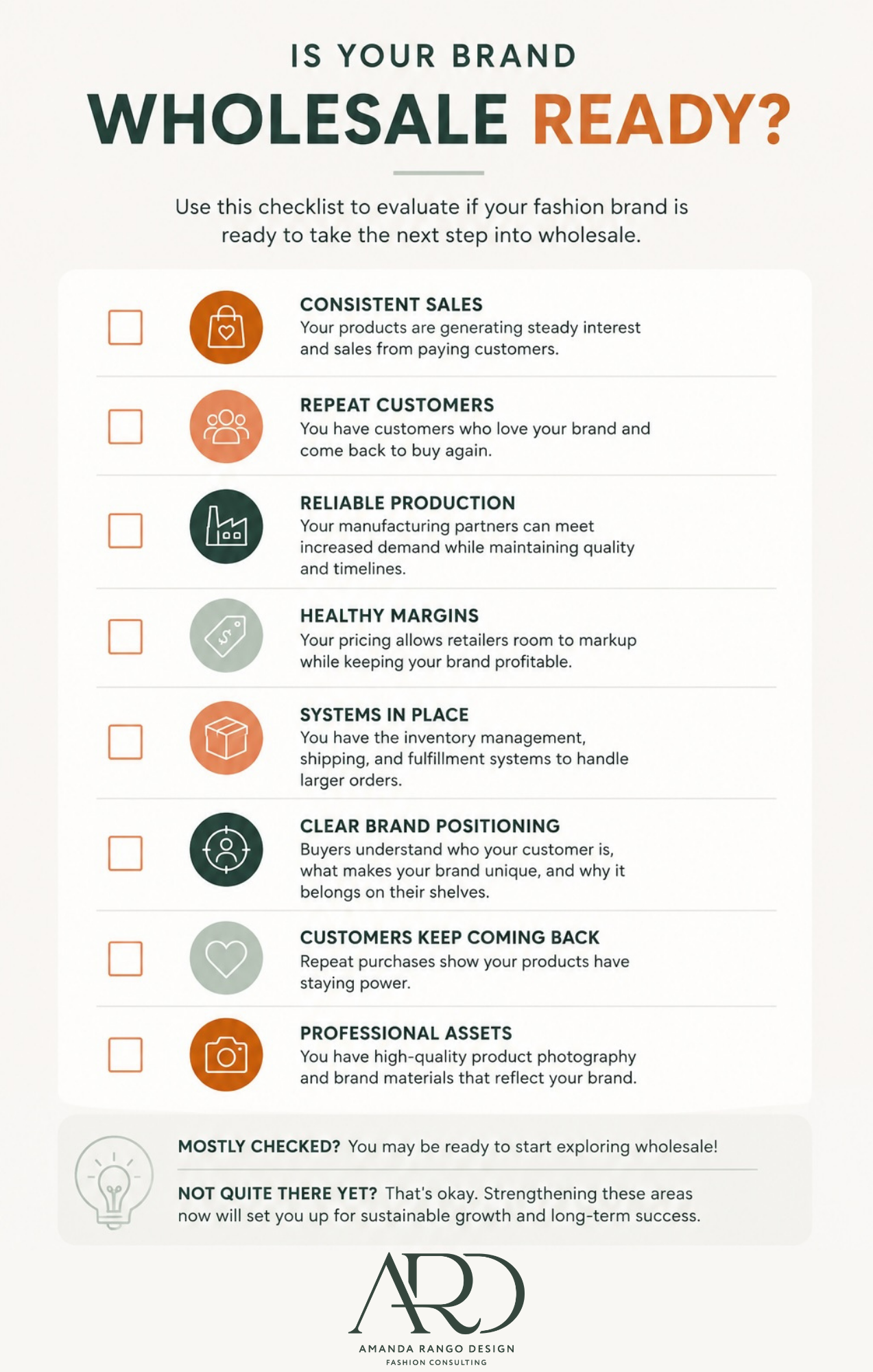
Before approaching retail buyers, ask yourself:
✔ Do you have consistent customer demand? Your products should already be generating interest and sales—not just from friends and family, but from paying customers.
✔ Have you proven your products can sell? A history of online sales, repeat customers, or successful pop-up events demonstrates market validation.
✔ Can your production keep up? Wholesale orders are often larger than direct-to-consumer sales. Your manufacturing partners should be able to meet increased demand while maintaining quality and timelines.
✔ Are your margins wholesale-friendly? Retailers need room to mark up your products while allowing your business to remain profitable. (We'll cover this in more detail later in this guide.)
✔ Do you have the systems to fulfill larger orders? Inventory management, shipping processes, and reliable production become even more important as your business grows.
✔ Is your brand clearly positioned? Buyers want to understand exactly who your customer is, what makes your brand unique, and why it belongs on their shelves.
✔ Are customers coming back? Repeat purchases are one of the strongest indicators that your products have staying power.
If your brand checks most of the boxes above, you may be ready to begin exploring wholesale opportunities.
The next step is understanding what happens on the other side of the table—and what retail buyers are really evaluating when they review your brand.
What Retail Buyers Are Looking For
One of the biggest mindset shifts founders need to make is this:
Retail buyers aren't simply shopping for products—they're managing risk.
Every product they bring into their store takes up valuable shelf space, represents an investment, and needs to generate sales. Their job isn't to discover great products; it's to choose brands they believe will perform.
That's why your product is only part of the equation.
Buyers are evaluating your business just as much as they're evaluating your collection.
A Unique Brand Position: Can you clearly communicate what makes your brand different? Buyers want to understand your mission, product story, and why customers choose you over competitors.
A Clearly Defined Customer: A strong understanding of your target customer helps buyers see where your products fit within their assortment and who will shop for them.
Proven Customer Appetite: Retailers want evidence that customers are already responding to your brand through online sales, repeat purchases, reviews, or an engaged community.
Operational Readiness: Buyers need confidence that you can meet production timelines, fulfill orders accurately, maintain quality, and support future growth.
Healthy Wholesale Margins: Your pricing strategy needs to support both your business and the retailer's margins. Wholesale profitability should be considered from the beginning, not adjusted later.
If you haven't already, check out our guide on developing a profitable pricing strategy for your apparel brand to better understand how wholesale pricing impacts long-term growth.
The strongest retail pitch isn't about convincing a buyer your product is great. It's about showing them your business is prepared to support a successful partnership.
Trusted Partner Spotlight: Meet Michelle Hsiao
To provide additional insight from the retail side of the industry, I sat down with Michelle Hsiao, to discuss some of the most common questions founders ask when preparing for wholesale and retail partnerships. Here's what she had to say.
Michelle is the Founder & CEO of Revenue Growth Advisors, where she helps product-based businesses develop profitable merchandising strategies, manufacturing plans, and wholesale growth initiatives. With more than 20 years of leadership experience at retailers including Macy's, Lord & Taylor, and Boscov's, Michelle now serves as a Fractional COO, helping emerging and established brands grow through strategic merchandising, pricing, and retail expansion.
Let’s Ask the Expert
Q: What's the biggest misconception founders have about wholesale?
A: Michelle:"Wholesale is an entirely different business model—not simply another sales channel.”
Michelle explains that many founders approach wholesale as an extension of their direct-to-consumer business, without realizing it requires a completely different financial and operational strategy. Wholesale pricing, inventory planning, production capacity, payment terms, and fulfillment all work differently than DTC. She also emphasizes that retailers expect brands to bring their own customer demand. A retailer should amplify an already successful brand—not be responsible for creating awareness or driving sales on your behalf.
Q: What's the biggest mistake brands make when pitching retailers?
A: Michelle:"Buyers make merchandising decisions based on performance, not passion alone."
While a compelling brand story matters, Michelle reminds founders that buyers make merchandising decisions based on performance, not passion alone. They want to understand who your customer is, why your products belong in their assortment, how your brand compares to the competition, and what you're doing to support sell-through after the products hit the sales floor. The easier you make it for a buyer to envision your products succeeding in their store, the stronger your pitch becomes.
Q: If you could give founders one piece of advice before approaching retailers, what would it be?
A: Michelle:"Prove your concept before pursuing wholesale."
Before approaching retailers, Michelle recommends validating your products through your own website, pop-up events, or marketplaces. Demonstrating real customer demand gives buyers greater confidence that your products will perform in a retail environment. She also encourages founders to research their target retailers well in advance—understanding their customer, merchandising strategy, and pricing—so that when the time comes to pitch, it's clear why your brand belongs in their assortment and how the partnership can be profitable for both sides.
Special Offer for ARD Readers
Thinking about wholesale but unsure if your business is ready?
Michelle is currently offering ARD readers a special one-hour Wholesale Strategy & Advisory Session for $269 (regularly $600).
Prior to the session, you'll complete a short questionnaire so Michelle can review your website and social channels and come prepared with personalized recommendations.
During this personalized session, she'll review your business, discuss your current challenges and opportunities, and provide strategic guidance tailored to your goals before you pursue retail partnerships.
Reserve your advisory session → LINK to schedule
How to Pitch Your Fashion Brand to Retail Buyers
Landing a retail partnership isn't about having the largest collection or the flashiest pitch. It's about clearly communicating who your brand serves, what makes it different, and why it belongs in a retailer's assortment.
Once your business is wholesale-ready, it's time to position your brand professionally. Before approaching buyers, focus on these four areas:
Tell Your Brand Story: Your story is what makes your brand memorable, but it shouldn't be the entire pitch. Share why your brand exists, what inspired you, and the problem you're solving for your customer. Keep it authentic, concise, and focused on the value you provide.
Clearly Define Your Customer: Retail buyers need to understand exactly who they're buying for. Go beyond demographics and consider your customer's lifestyle, values, shopping habits, and favorite brands. A clear customer profile helps buyers see where your products fit.
Lead With Best Sellers: Avoid overwhelming buyers with every product you've created. Lead with your strongest-performing styles and hero products. This builds confidence and helps retailers quickly understand what your brand does best.
Personalize Your Pitch: Before reaching out to a retailer, do your research. Ask:
Does my customer shop here?
Does my price point align with their assortment?
What need does my product fill?
A personalized pitch shows that you've done your homework and positions you as a potential long-term partner.
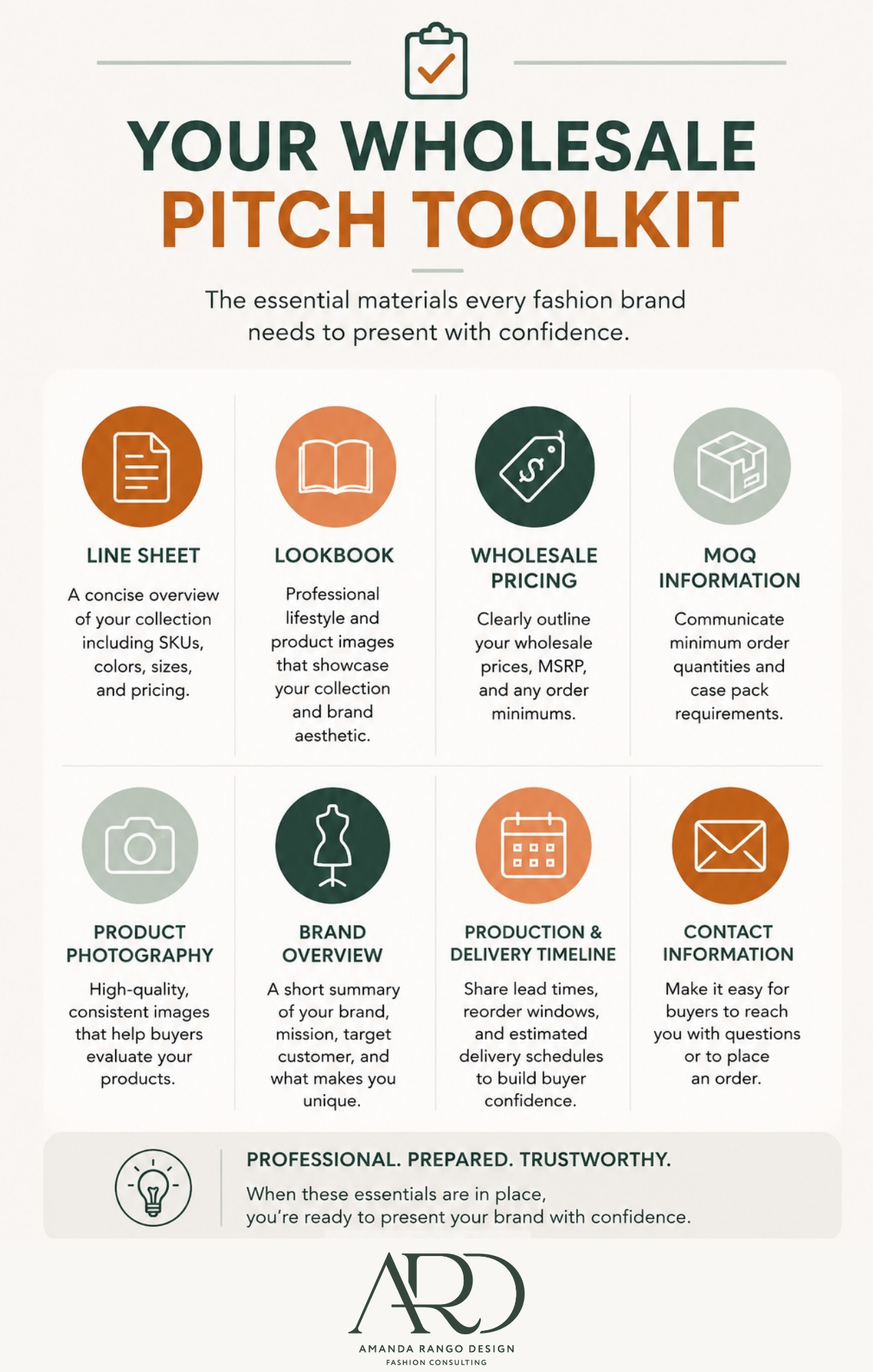
Retail Pitch Checklist: Materials Every Fashion Brand Needs
Line Sheet: A concise overview of your collection that includes product names, SKUs, available colors, sizes, wholesale pricing, and ordering information.
Lookbook: Professional lifestyle and product photography that showcases your collection while communicating your brand identity.
Wholesale Pricing: Clearly outline your wholesale pricing, suggested retail pricing (MSRP), and any applicable order minimums.
Minimum Order Quantities (MOQs): Clearly communicate any minimum purchase requirements so expectations are established from the beginning.
Product Photography: Invest in clean, professional imagery that allows buyers to easily evaluate your products and merchandising potential.
Brand Overview: Prepare a short brand summary that explains your mission, target customer, and what makes your products unique.
Production & Delivery Timelines: Buyers want confidence that you can deliver on time and replenish inventory when needed. Be transparent about your lead times and production capabilities.
Contact Information: Include clear contact details and make it easy for buyers to ask questions or place an order.
How to Build Relationships With Retail Buyers Before You Pitch
Wholesale success isn't built on a single email. It's built on relationships, trust, and timing. Think of buyers as potential long-term partners, not just people you need to sell to.
Before pitching, focus on building genuine connections:
Follow and engage thoughtfully: Follow retailers and buyers online, engage with their content, and learn about their brand, customer, and aesthetic before reaching out.
Visit stores when possible: Shop in-store, observe their merchandising, understand the brands they carry, and determine whether your products are truly a fit.
Respect the buyer's process: Buyers manage many vendor relationships. If they're not accepting new brands or suggest a better time to connect, respect their timeline and remain professional.
Stay connected over time: Continue sharing meaningful brand updates, product launches, and milestones. Thoughtful follow-ups keep your brand top of mind without feeling like a sales push.
The strongest retail partnerships are built on trust, not transactions. A "not right now" today can become a valuable opportunity when the timing is right.
Your Next Steps Toward Wholesale Success
Breaking into wholesale isn't about having the perfect pitch. It's about building a business that's ready for retail.
A successful retail partnership starts with a strong foundation: proven customer demand, healthy margins, operational readiness, and a brand that buyers can confidently support.
Before approaching retailers, ask yourself:
Can I support larger orders?
Have I validated demand?
Are my pricing and systems built for growth?
Does my brand presentation inspire buyer confidence?
If the answer isn't yes to every question, that's an opportunity to strengthen your foundation before taking the next step.
At ARD Fashion Consulting, we help fashion founders build production-ready, retail-ready brands with the clarity and confidence to scale.
Ready to explore wholesale opportunities? Schedule a complimentary Discovery Call to create a roadmap for your next stage of growth.