
Why Fashion Brands Shouldn’t Rely on Their Manufacturer for Product Development
For many fashion founders, their manufacturer becomes one of their most important early partners. A great factory can help turn an idea into a tangible product while providing expertise in materials, construction, sampling, and production.
But as your brand grows, the relationship needs to evolve.
Your manufacturer should help execute your product strategy—not own it.
Your brand should know what you're making, who it's for, how it should fit, what it needs to cost, and why it belongs in your assortment. When that knowledge lives primarily with your factory, your business can quickly become dependent on one vendor.
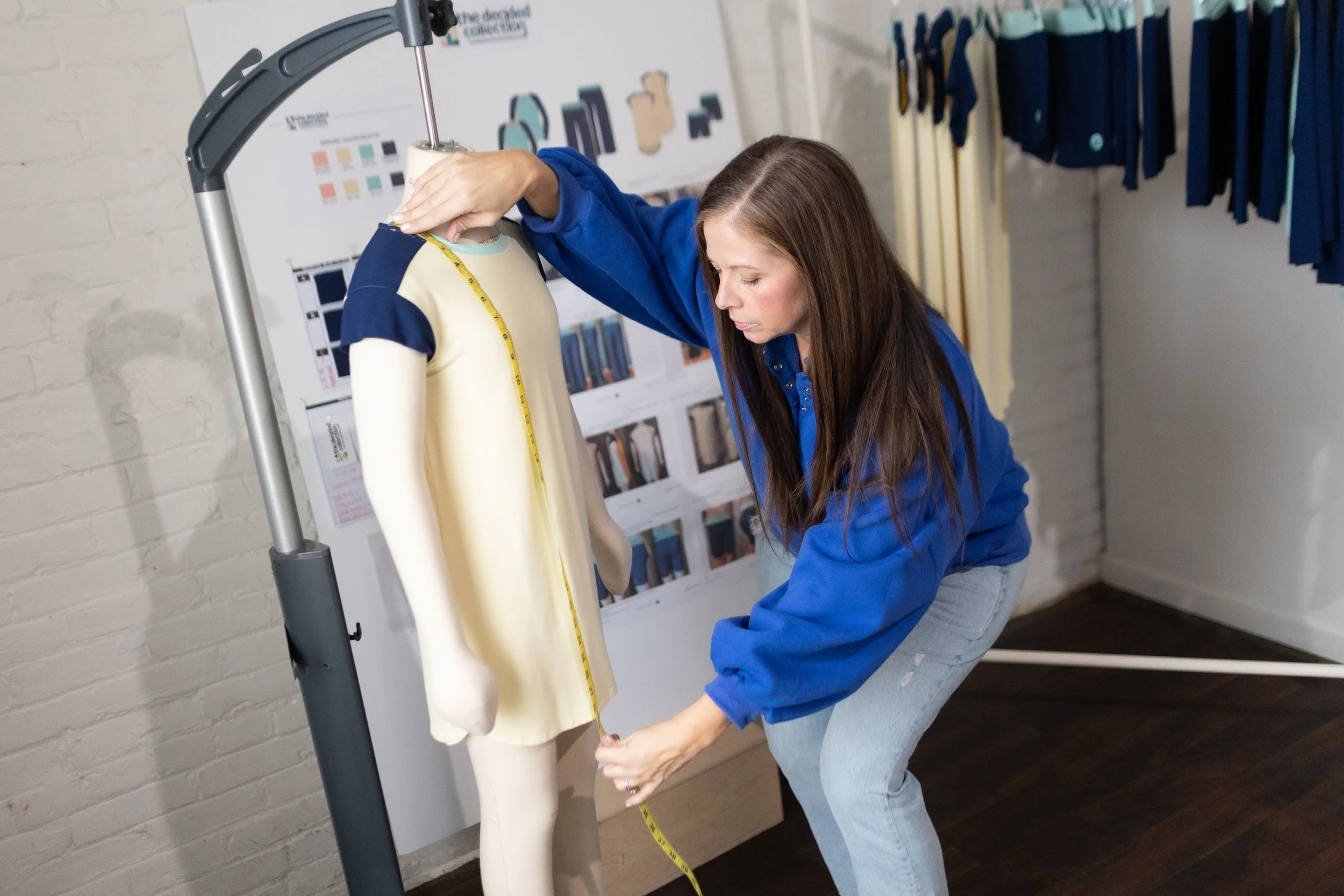
At ARD Fashion Consulting, I see this shift become especially important as founders move beyond startup mode and into the messy middle of growth. The goal isn't to replace a great manufacturing partner. It's to become a stronger, more informed partner to them.
Your manufacturer brings production expertise. Your brand brings the strategy, standards, and direction.
Why Founders Rely on Manufacturers in the Beginning
Let's be clear: relying heavily on your manufacturer early on isn't necessarily a mistake.
Most emerging fashion founders don't have an internal product development team or years of technical apparel experience. When budgets are limited, finding a factory that can help turn an idea into a physical product can provide valuable early support.
Founders often rely on manufacturers because they:
Don't have a product development team managing the process.
Lack technical expertise around fit, construction, materials, or production.
Don't know how to create or manage tech packs and other technical assets.
Aren't sure what questions to ask during sampling and development.
Need help while they're learning how apparel development works.
Don't yet have someone representing the brand to manage approvals and hold vendors accountable for fit, quality, and timelines.
For an early-stage brand, this arrangement can work.
The challenge comes when your business grows, but your product development structure doesn't grow with it.
What started as helpful support can gradually become dependency—particularly when the strategy, technical knowledge, and history behind your products begin to live with your manufacturer rather than your brand.
Manufacturer dependence can be a natural stage of growth. The key is knowing when you've outgrown it.
What Your Manufacturer Should Actually Own
A strong manufacturer is an invaluable partner, but their expertise should support your product strategy, not replace it.
Think of the relationship this way:
Your brand sets the direction. Your manufacturer helps determine how to execute it successfully.
Your Manufacturer Should Own:
Production execution: Manufacturing approved products consistently to your specifications.
Manufacturing expertise: Advising on construction, machinery, capabilities, and production efficiencies.
Sourcing within agreed parameters: Identifying materials and trims that meet your quality, aesthetic, performance, and cost requirements.
Production timelines + quality control: Managing lead times, production standards, and communicating issues early.
Technical troubleshooting: Flagging feasibility challenges and recommending solutions during sampling and production.
Your Brand Should Own:
Product + assortment strategy: What you're making, why you're making it, and how it serves your customer.
Cost targets + margin goals: Establishing profitability parameters and knowing when to negotiate or cost-engineer.
Fit + quality standards: Defining the consistency your customer should expect across the brand.
Technical assets + IP: Maintaining access to your tech packs, specifications, patterns, artwork, and product history.
Customer insight: Using sales data, feedback, and brand positioning to determine what comes next.
Vendor strategy: Maintaining the flexibility to work across factories, regions, or countries as your needs evolve.
When one factory holds your product knowledge and technical history, partnership can quietly become dependency.
Owning that information gives your brand greater flexibility to negotiate, diversify vendors, react to demand, and make sourcing decisions based on what's best for the business.
The Risks of Letting Your Manufacturer Drive Product Development
When a manufacturing relationship works well, letting your factory take on more of the development process can feel efficient. But as your brand grows, excessive dependence on a single manufacturer can create risks that aren't apparent until you need to make a change.
Your assortment can become reactive. Factories naturally recommend what they produce well, but what's easiest to manufacture isn't always what your customer needs. Product decisions should be driven by customer insight, sales data, brand positioning, and assortment strategy—not factory capabilities alone.
Fit and quality can become inconsistent. Your manufacturer can execute measurements, but your brand needs to define what good fit and quality mean for your customer. Without consistent standards, sizing can vary across styles and vendors—impacting returns, reviews, and customer trust.
Margins can suffer. Without target costs established early, you may develop a great product only to discover it doesn't support your retail price or margin goals. Brand-side ownership gives you more opportunity to negotiate, cost-engineer, and make informed trade-offs before production.
Your sourcing options can become limited. If one manufacturer holds your patterns, specifications, and product history, changing factories becomes much harder. That matters when tariffs, freight, capacity, lead times, or costs shift—or when you want to strategically use different production partners.
The goal isn't to protect yourself from your manufacturer. It's to create a structure that allows you to work more effectively with them and remain flexible as your business grows.
What Actually Is Product Development?
One of the biggest misconceptions among emerging fashion founders is that once you have a tech pack, you're ready to make a sample and move into production.
A tech pack is an important tool—but it's only one part of product development.
Product development is the process of turning an idea into a commercially viable, technically sound, production-ready product that serves both your customer and your business.
That process typically includes:
Product concept + customer need: Defining what you're making, who it's for, and why it belongs in your assortment.
Assortment + design: Building the collection and determining materials, trims, colors, prints, and finishes.
Cost targets: Establishing costs that support your retail price and margin goals.
Technical development + tech packs: Documenting measurements, construction, materials, artwork, and specifications.
Sampling + fit: Evaluating prototypes and refining fit, construction, function, and design.
Approvals + quality: Reviewing components and confirming standards before production.
Calendar management: Managing sampling, approvals, production, freight, and delivery around your launch timeline.
And importantly, product development isn't always a straight line. A fabric change can affect fit. A construction change can impact cost. A cost issue may require a material adjustment. Your brand needs visibility across those decisions and their ripple effects.
Fit Is a Perfect Example
Your manufacturer can execute measurements and fit corrections, but your brand needs to define what good fit means for your customer.
As your assortment grows, those standards need to remain consistent. Fit consistency builds trust, and trust helps build repeat customers.
That's product development: not simply getting something made, but creating a repeatable process for getting the right product made at the right fit, quality, cost, and time.
The Benefits of Owning Your Product Development Process
Owning product development doesn't mean building a full internal team. It means the strategy, standards, technical knowledge, and decision-making behind your products stay with your brand, regardless of who helps execute them.
That ownership creates several advantages:
Greater control over your brand vision: Product decisions are driven by your customer, not simply factory capabilities.
Stronger margins: Establishing target costs early gives you more flexibility to negotiate, cost-engineer, and make informed decisions before production.
More consistent fit + quality: Documented standards help create a consistent customer experience across products and manufacturing partners.
Greater sourcing flexibility: If costs, tariffs, capacity, or lead times change, you have the product knowledge needed to explore another factory, country of origin, or production strategy.
Easier scaling: Clear processes and technical documentation make it easier to add team members, consultants, or manufacturing partners as your business grows.
Instead of asking, “What should we do?” you can say:
“Here's what we're trying to achieve. What's the best way to execute it together?”
That's the shift from simply getting products made to building a scalable product business.
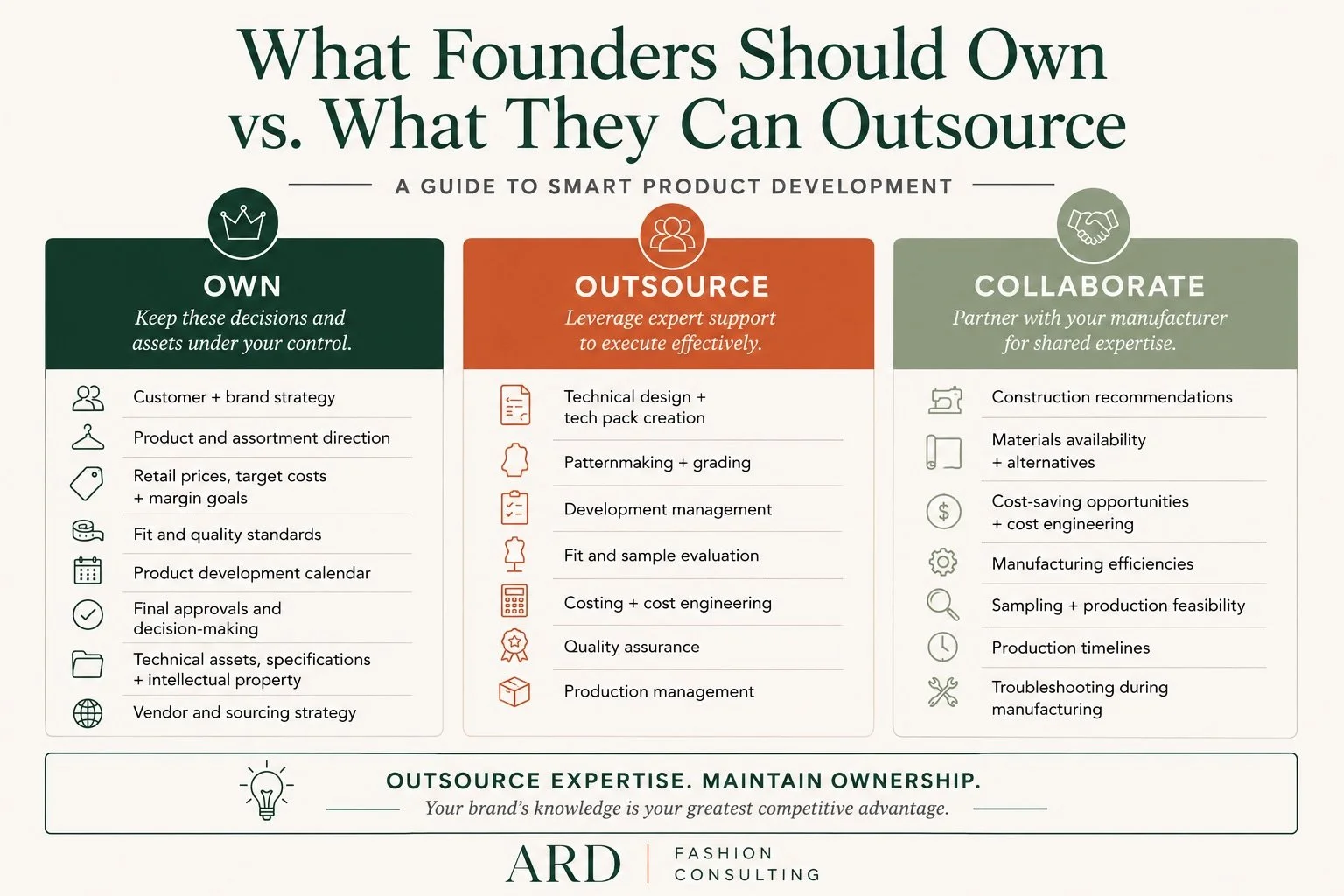
What Founders Should Own vs. What They Can Outsource
Here's an important distinction: owning your product development process doesn't mean personally executing every part of it.
As your brand grows, the goal is to know which decisions must remain with the brand, where specialized expertise can support you, and when collaboration with your manufacturer makes sense.
Your brand should own the strategy, customer insights, assortment direction, margin goals, fit standards, technical assets, and final approvals.
You can outsource specialized functions like technical design, patternmaking, grading, fit support, quality assurance, and product development or production management.
And you should collaborate with your manufacturer on construction, material alternatives, production feasibility, efficiencies, timelines, and troubleshooting.
The people supporting you may know more about a specific part of the process—and that's exactly why you hire experts. But your brand should retain the knowledge, documentation, and decision-making authority behind the product.
The Shift: From Manufacturer-Dependent to Product-Led
At some point, the relationship with your manufacturer needs to evolve.
This is what I often call the “messy middle”—you've moved beyond startup mode, but you may not yet have the team, systems, or infrastructure of a larger brand.
The shift looks something like this:
Manufacturer-Dependent:
"My manufacturer helps me figure out what we're making."
Product-Led:
"We know what we're making, why we're making it, who it's for, and what success looks like. Now we need the right partners to execute it."
That's the real shift: moving from asking “Can my factory make this?” to asking “Should we make this—and who's the best partner to help us do it?”
You Don’t Have To Do It All Yourself
Taking ownership of product development doesn't mean becoming a product development expert overnight or doing every task yourself.
It means having enough visibility and structure to understand what needs to happen, who should own it, what can be delegated, and what your manufacturer needs from you to execute successfully.
This is especially important in the messy middle, when doing everything yourself is no longer sustainable, but hiring a full internal product team may not make sense yet.
Experienced consultants, fractional product development support, and specialized partners can help fill that gap—bringing expertise, process, and accountability while your brand maintains ownership of the product.
Read our blog, “When Should You Hire a Fashion Brand Consultant,” to understand what that relationship might look like and how to choose the right level of support.
The goal isn't to do more. It's to build the right support around you so your business can grow.
Take Ownership of Your Product Development
Your manufacturer can—and should—be one of your most valuable partners. But the strongest manufacturing relationships happen when the brand brings clarity, direction, and accountability to the table.
If you've reached the messy middle, where your manufacturer has become your default product development team, it may be time to rethink the structure.
The goal isn't to replace a great manufacturing partner. It's to build a product development process that allows you to work better together, scale with confidence, and avoid becoming dependent on any single vendor.
At ARD Fashion Consulting, we help growing apparel brands build that foundation through strategic, technical, and fractional product development support designed for their next stage of growth. Get in contact to schedule a discovery call!