
How to Maintain Healthy Margins as Your Fashion Brand Grows
Growth within your fashion brand can be incredibly exciting, but scaling too quickly without the right strategy can leave your business vulnerable to shrinking margins and long-term financial risk.
Maintaining healthy margins is what allows brands to reinvest in inventory, marketing, product development, and sustainable growth as the business evolves.
In this guide, ARD Fashion Consulting founder Amanda Rango breaks down the most common growing pains fashion brands face, and how to build a profitable business that can scale successfully over time

As a fashion brand, several key levers directly impact your margins, including operating and sourcing costs, pricing strategy, discounting practices, and inventory investment.
This guide assumes you already have a foundational understanding of margin calculations. If you’re looking to start with the basics, we recommend reading our blog, “The Beginner’s Guide to Understanding Product Costs and Margins in Fashion,” first.
Managing Production Costs Without Sacrificing Quality
As your fashion brand grows, rising production and operational expenses can quickly begin to impact profitability.
While it may be tempting to cut corners in an effort to protect margins, reducing quality can ultimately damage customer trust, increase return rates, and weaken long-term brand loyalty.
Instead, successful brands focus on optimizing their production strategy, finding ways to improve efficiencies, strengthen vendor partnerships, and make smarter sourcing decisions without compromising the integrity of the product.
Building Strong Vendor Relationships
Reliable vendor relationships play a major role in maintaining healthy margins as your business scales. Strong manufacturing and sourcing partners can help improve pricing, provide flexibility during production challenges, and create a more efficient overall supply chain.
As order volume increases over time, long-term partnerships often create opportunities for:
Better cost negotiations
Improved minimum order quantities (MOQs)
Shorter lead times
More flexibility with development and revisions
Consistent communication and organization are also critical. Miscommunication during sourcing or production can lead to costly delays, product errors, excess sampling expenses, or inventory.
How ARD Fashion Consulting Helps Brand Source Strategically
At ARD Fashion Consulting, we help fashion brands build strategic factory partnerships that support both profitability and long-term growth.
Rather than taking a one-size-fits-all approach to sourcing, ARD works to identify the right factory and country of origin based on each brand’s specific product category, quality expectations, price point, and stage of business growth.
Different regions specialize in different product types, construction methods, and production capabilities.
ARD helps brands navigate these decisions by sourcing factories that are best aligned with the product they are trying to create, whether that means prioritizing craftsmanship, lower minimum order quantities (MOQs), speed to market, or cost efficiency.
ARD also helps brands:
Match factory MOQs to realistic inventory investment levels
Negotiate pricing and production terms on the brand’s behalf
Identify opportunities to reduce production costs without sacrificing quality
Build scalable sourcing strategies that evolve alongside the business
For many growing brands, factory sourcing mistakes can become extremely expensive over time.
Building a Pricing Strategy That Supports Growth
As your fashion brand grows, pricing decisions become about much more than simply covering your costs.
A strong pricing strategy protects your margins, supports long-term scalability, and creates the financial flexibility needed to reinvest back into your business. Without it, even brands with strong sales can struggle to remain profitable over time.
Understanding Your True Product Costs
One of the biggest mistakes growing brands make is underestimating the actual cost of producing their product.
Your unit cost is only one piece of the equation. To understand your true profitability, you need to calculate your total landed cost, the full cost of getting your product into inventory and ready to sell.
This should include:
Product manufacturing costs
Freight and shipping expenses
Duties and customs fees
Packaging and labeling
Sampling and development costs
As your business grows, it’s also important to account for operational overhead, such as:
Warehousing
Software and systems
Marketing expenses
Team support or contractors
Many brands price based only on production cost, which can create margin problems later as operational expenses increase.
Wholesale vs. Direct-to-Consumer Pricing
As brands grow, many begin expanding beyond direct-to-consumer sales into wholesale, retail partnerships, or additional sales channels.
This is where pricing strategy becomes especially important.
Wholesale pricing requires enough margin for both:
Your business to remain profitable
Retail partners to achieve their expected markup
In fashion, many retailers follow a keystone pricing model, meaning they typically double the wholesale price at retail.
For example:
Wholesale Price: $50
Retail Price: $100
If your pricing structure is too narrow from the start, expanding into wholesale later can be difficult without dramatically increasing retail prices.
Planning for Promotions and Discounts
Discounting is a normal part of retail, but brands that rely too heavily on markdowns often erode both profitability and customer perception over time.
Instead of reacting impulsively with deep discounts, growing brands should build promotional flexibility into their pricing structure from the start.
This allows you to:
Run strategic sales periods without eliminating margin
Offer incentives during slower sales cycles
Protect profitability during promotional campaigns
The strongest brands use promotions intentionally, not as a constant solution for excess inventory or weak planning.
Avoiding Overstock Inventory as Your Fashion Brand Grows
Inventory is one of the largest financial investments fashion brands make, and one of the easiest places for margins to quietly disappear.
While running out of inventory can hurt sales, carrying too much inventory can create major cash flow strain, excessive markdowns, and operational inefficiencies as your business grows.
Understanding Why Overstock Happens
Overstock inventory usually doesn’t happen because founders are careless—it happens because growth creates pressure to scale quickly.
Common causes include:
Over-ordering based on emotion instead of data
Misjudging demand during early growth stages
Increasing production faster than sales velocity can support
Many brands assume bigger inventory investments automatically lead to bigger growth. But without clear forecasting, excess inventory can quickly tie up cash that should be fueling other areas of the business.
Forecasting Demand More Accurately
As your brand grows, inventory decisions should become increasingly data-driven.
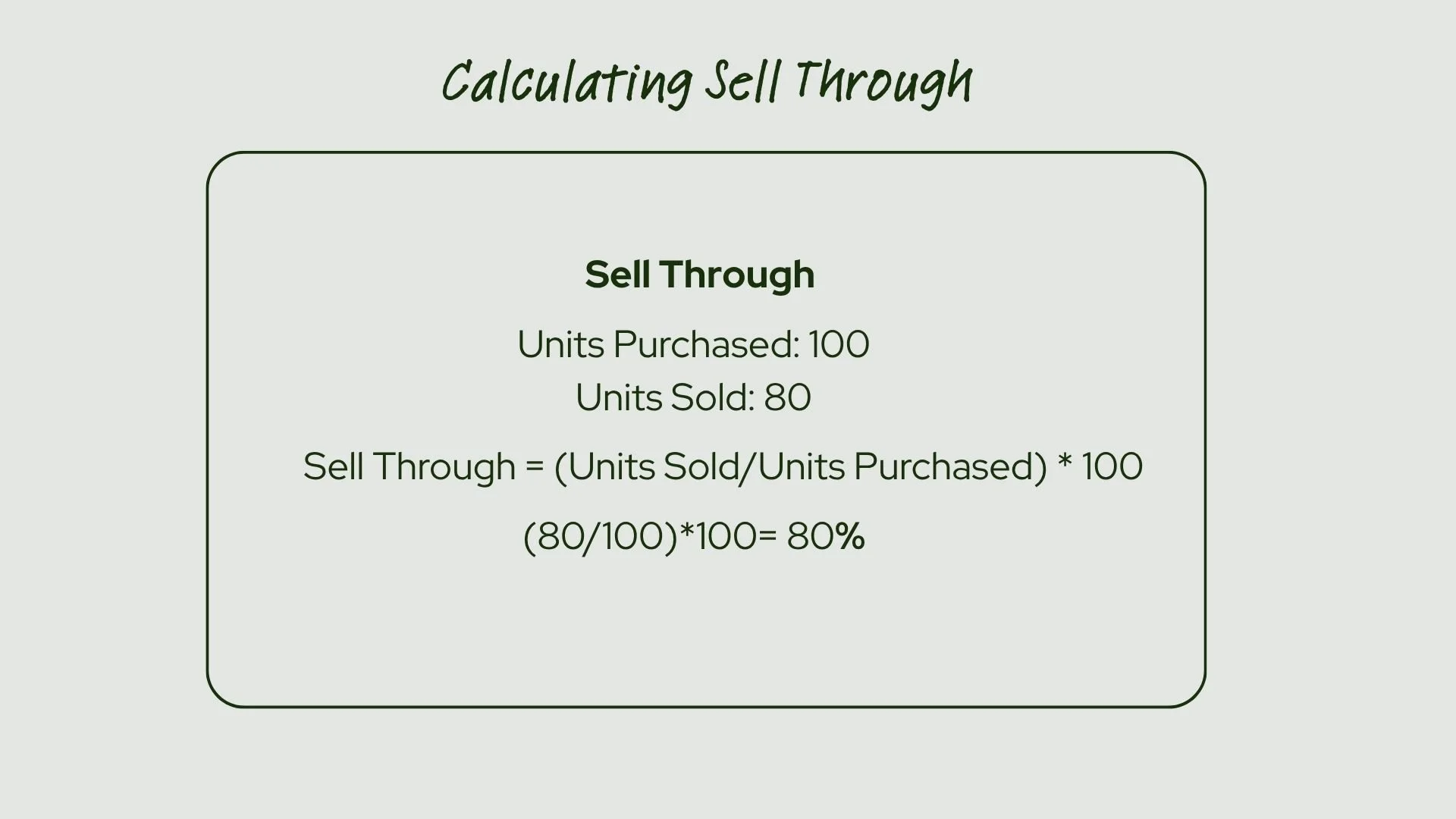
One of the most important metrics to understand is the sell-through rate.
Sell-through measures how much inventory you sell within a specific timeframe compared to how much inventory you originally received.
Basic formula:
(Units Sold ÷ Units Received) x 100 = Sell-Through Rate
For example:
80 units sold out of 100 units received
Sell-through rate = 80%
Tracking sell-through helps brands:
Identify strong-performing products
Plan smarter reorders
Avoid overbuying weak-performing styles
It’s also important to evaluate:
Seasonal products vs. evergreen best sellers
SKU-level performance by size, color, and category
Realistic growth projections instead of aspirational ordering
Growth forecasting should be rooted in evidence, not excitement. The strongest inventory strategies balance optimism with operational discipline.
Expanding into New Collections Responsibly
As brands grow, there’s often pressure to continuously launch new products. But expanding too quickly can create inventory risk if demand hasn’t been properly validated.
Instead, many successful brands test new categories strategically before fully scaling production.
This can include:
Soft-launching new styles in smaller quantities
Using pre-orders or waitlists to gauge customer interest
Gathering customer feedback before committing to larger buys
Leveraging limited-edition drops to test market response
This approach allows brands to explore growth opportunities while protecting cash flow and reducing inventory exposure.
At ARD Fashion Consulting, we often help brands approach expansion in phases, validating product demand before making larger production investments that could impact margins long-term.
Building a Scalable, Profitable Foundation for Growth
As your fashion brand grows, maintaining healthy margins becomes less about a single decision and more about how all parts of your business work together—from sourcing and production, to pricing strategy, to inventory planning. When these areas are aligned, brands are able to scale with confidence, avoid costly missteps, and protect the profitability that fuels long-term success.
However, many of the most expensive growth mistakes happen when brands are forced to make sourcing, production, or inventory decisions without the right structure or experience in place. That’s where having a strategic partner becomes essential.
At ARD Fashion Consulting, we work with fashion brands to build the operational and sourcing foundation needed to scale profitably—from factory sourcing and negotiation, to production planning and cost optimization. Our goal is to help brands make smarter decisions earlier, so they can grow without sacrificing quality, cash flow, or margins.