
Creating children’s sleepwear is about more than choosing a cute print and a really soft fabric. From fit and fabric selection to flammability, construction, testing, and labeling, there are important considerations that need to be built into the product from day one.
Written by Amanda Rango of ARD Fashion Consulting, with years of specialized experience creating children’s pajama brands from scratch, we’re breaking down what fashion founders need to know about developing children’s sleepwear, including the safety requirements that can impact your product, timeline, and budget.
When it comes to kids’ apparel, safety isn’t a final checkbox. It’s part of the product development process.
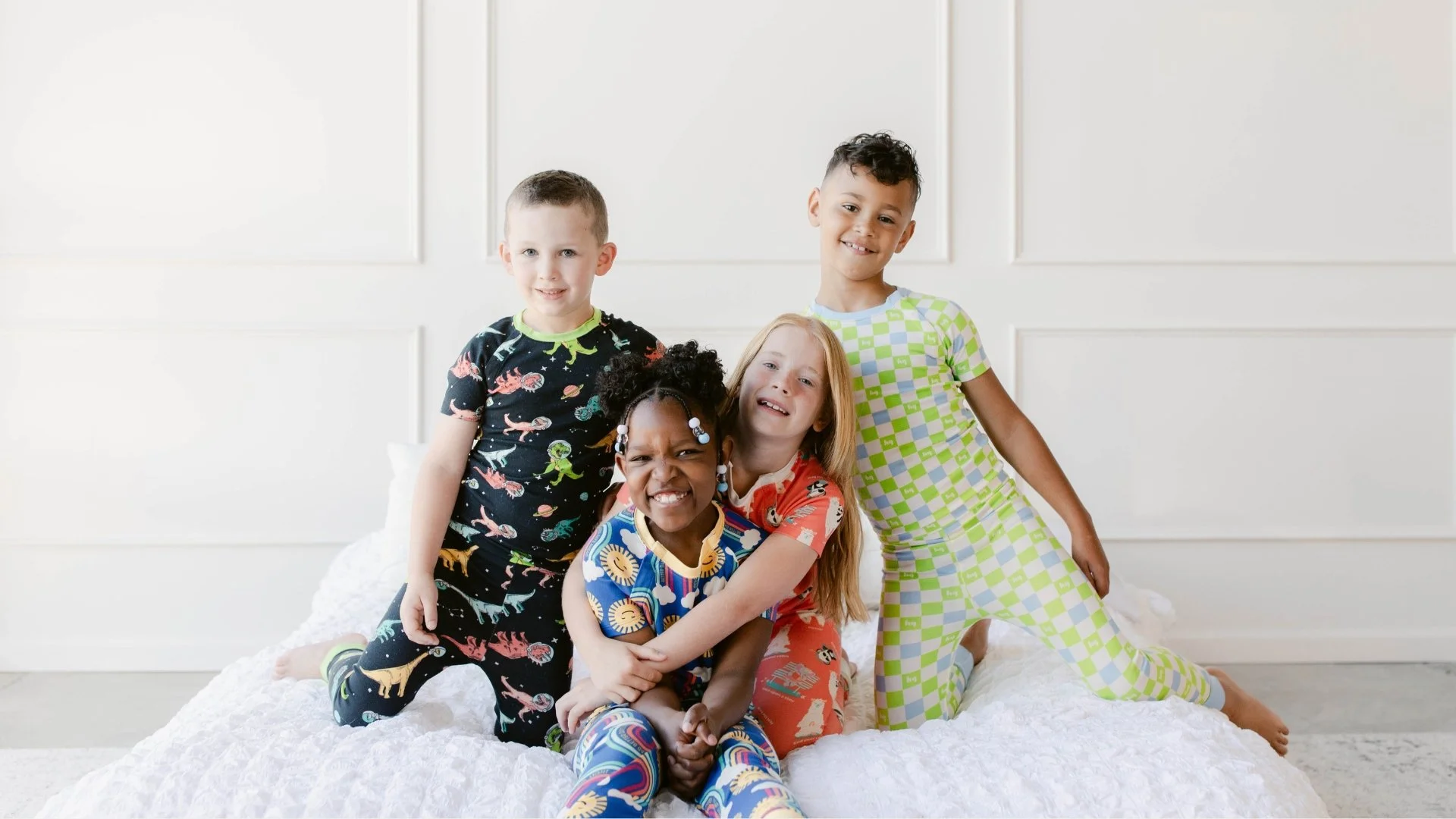
Former ARD client, Hallegrace, a sleepwear brand for pediatric cancer patients.
Why Children’s Sleepwear Requires a Different Product Development Approach
Children’s apparel already comes with its own set of considerations. The end user is a child, but a parent or caregiver often makes the purchasing decision.
That means you're designing for two audiences at once.
The child needs a garment that is comfortable, functional, appropriately fitted, and easy to move in. The parent is thinking about safety, durability, washability, quality, and whether the garment will hold up after being worn about 47 times in one week.
(Parents know what we're talking about.)
Safety: Are the materials, construction, trims, and overall design appropriate for the intended use?
Age and size range: Requirements and product considerations can vary depending on the age and size of the child.
Fit and movement: The garment needs to allow for comfortable movement while also meeting any applicable requirements for its intended category.
Fabric and construction: Fiber content, weight, stretch, finishes, seams, trims, and other construction details all play a role.
Intended use: Is the garment actually designed and marketed to be worn for sleeping?
Testing: What testing is required, and when should it happen during development?
Labeling and compliance: What information needs to be included on the garment, packaging, and product documentation?
Parent expectations: Comfort, softness, durability, and ease of care matter just as much as the aesthetic.
This is why product development is so much more than creating a sketch and sending it to a factory.
Start With the Intended Use of the Sleepwear
Before you start choosing fabrics or building out your tech pack, start with a deceptively simple question:
What exactly is this product, and how is it intended to be used?
A pajama set, a loungewear set, and a children's daywear set may look similar on a mood board, but the intended use and how the product is designed, marketed, and sold can affect which requirements apply.
Start by defining:
The intended age and size range
Whether the product is sleepwear, loungewear, or daywear
The environment in which it will be worn
The season or climate it is intended for
Whether it is designed to be worn on its own or layered
The intended fit and silhouette
How the product will be described and marketed to the customer
This may feel like a lot of detail before you've even made your first sample, but these classifications are crucial to your next steps when it comes to legal implications and safety standards.
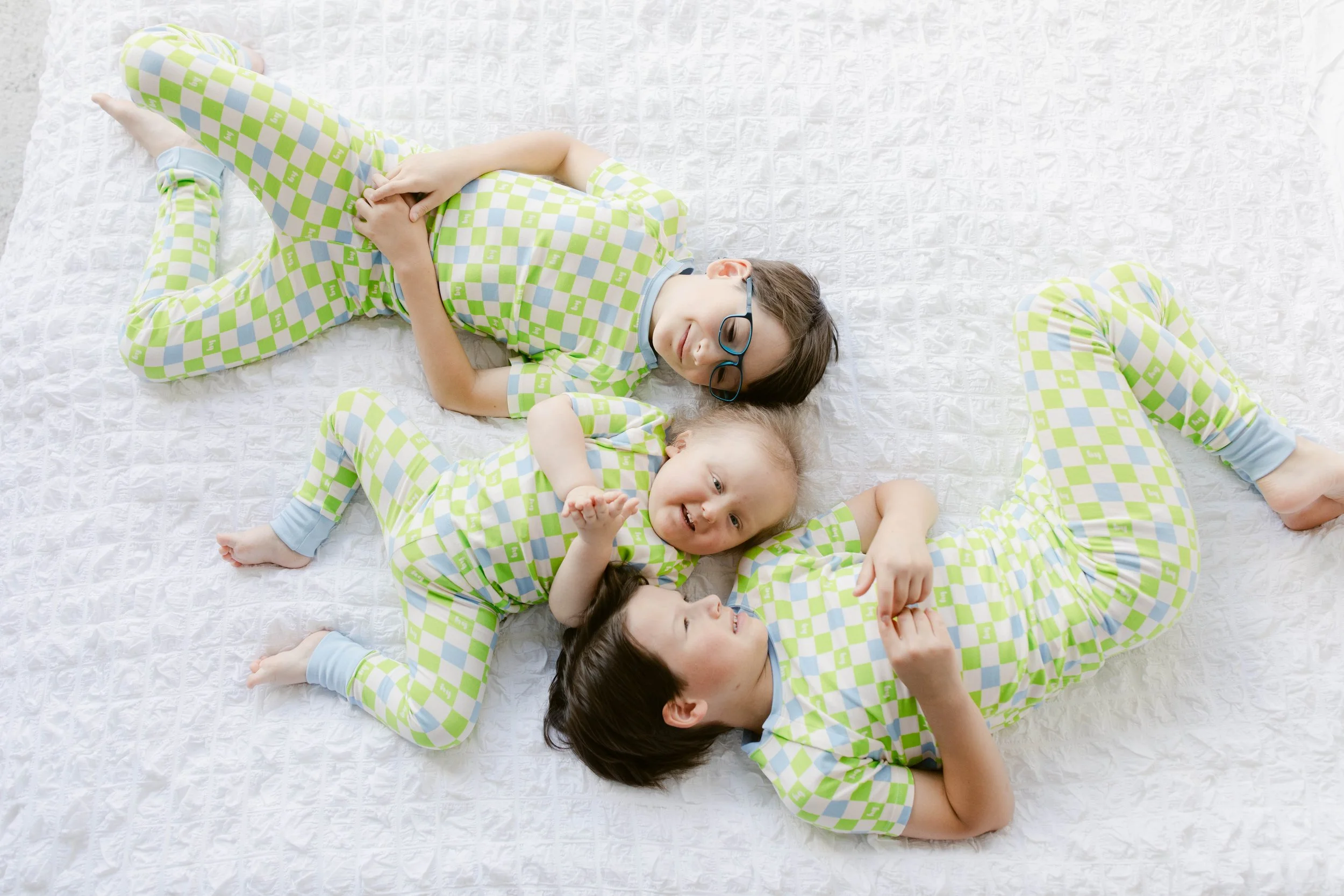
Why Product Classification Matters
One important distinction for children's sleepwear is the difference between garments that fall under the children's sleepwear flammability standards and garments that qualify as tight-fitting sleepwear or certain other exceptions.
The U.S. Consumer Product Safety Commission (CPSC) considers several factors when determining whether a garment is children's sleepwear, including the nature of the garment, its suitability for sleeping, its design, how it is promoted and distributed, and how likely it is to be purchased and used primarily for sleeping.
In other words, you can't necessarily design a loose-fitting garment and decide later that you'll simply call it "loungewear" to avoid sleepwear requirements.
The product, its design, its intended use, and its marketing all matter.
This is one reason it's important to think about compliance during product development rather than after the product is already designed.
Fabric Selection Is a Safety and Product Decision
Fabric selection is one of the areas where product development and safety intersect most directly.
Of course, you want the fabric to feel soft against a child's skin. But softness is only one piece of the puzzle.
When evaluating a fabric for children's sleepwear, consider:
Fiber content
Fabric weight
Stretch and recovery
Breathability
Hand feel and softness
Durability
Shrinkage
Colorfastness
Fabric finishes
Chemical considerations
How the fabric performs when exposed to heat or flame
The right fabric needs to work for the whole product, not just the first five seconds of the customer touching it in a showroom or opening the package.
Certain fabrics may also qualify for testing exemptions under specific flammability standards. But an exemption from a particular testing requirement does not mean that the product is exempt from applicable safety requirements altogether.
Don't Choose a Fabric Based on Feel Alone
Here's a classic product development lesson:
The softest fabric on the sample rack isn't automatically the right fabric for your product.
You need to evaluate fabric based on a combination of:
Performance + safety + customer experience + cost.
A fabric can feel incredible but shrink significantly after washing.
A fabric can have the perfect weight but not provide the performance you're looking for.
A fabric can check every aesthetic box but create challenges when you get to testing or production.
And a fabric that works beautifully for an adult loungewear collection isn't automatically the right choice for children's sleepwear.
The goal isn't to find the "best" fabric in isolation. It's to find the fabric that makes sense for this specific product.
Understand Children’s Sleepwear Flammability Requirements
This is where children's sleepwear development gets particularly important.
The CPSC has specific flammability standards for children's sleepwear designed to protect children from burn injuries associated with ignition from small open-flame sources. The children's sleepwear flammability standards are covered under 16 CFR Part 1615 for sizes 0 through 6X and 16 CFR Part 1616 for sizes 7 through 14.
For children's sleepwear that falls under these standards, both the fabric and finished garments are subject to specific flammability requirements and testing.
There are also important distinctions for tight-fitting garments and certain infant garments. Tight-fitting sleepwear is excluded from the specific children's sleepwear flammability testing standards, but it must meet the applicable requirements for tight-fitting garments and the general clothing flammability standard.
That's why this is not something you want to figure out after the garment is already sitting in your warehouse.
Tight-Fitting vs. Non-Tight-Fitting Children’s Sleepwear
One of the most important concepts for a founder to understand is that "tight-fitting" has a specific regulatory meaning.
It isn't simply a subjective decision that your pajamas are "pretty fitted."
Tight-fitting children's sleepwear must meet specific maximum dimensions at designated points of the garment, including areas such as the chest, waist, seat, upper arm, thigh, wrist, and ankle. There are also specific requirements around certain trims and construction details.
This means that fit development becomes an important part of the compliance conversation.
You don't want to develop your pattern, approve your fit, finalize your fabric, and then ask whether the garment meets the requirements.
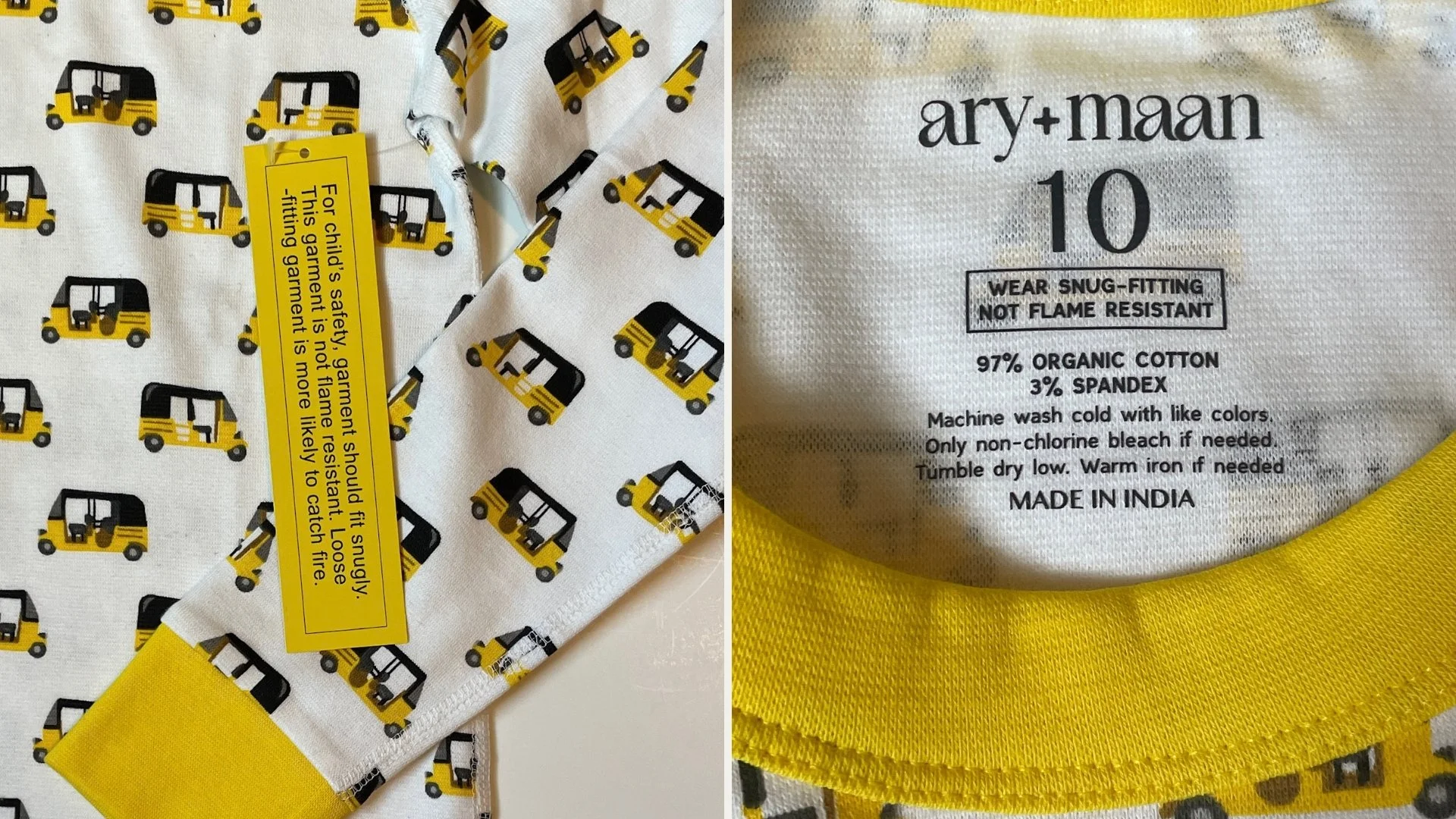
Labeling to adhere to Children’s Sleepwear Regulations
Don't Wait Until Production to Think About Compliance
This is one of the biggest founder lessons we can give you:
Safety should not be the final box you check before placing your PO.
It should influence the product from the beginning.
Testing, fit, fabric selection, construction, and labeling can all affect your development timeline. If something fails late in the process, you may be looking at another round of sampling, material changes, pattern revisions, additional testing, or production delays.
And suddenly that "small compliance issue" has become a much larger budget issue.
Build these considerations into your product development calendar from the start.
Details and Construction Can Create Additional Considerations
Once you start getting into the actual design of a garment, it's easy to focus on the big picture: silhouette, print, color, and overall aesthetic.
But the little details matter, too.
Think about:
Drawstrings
Cords
Buttons
Snaps
Zippers
Appliqués
Embroidery
Decorative trims
Pockets
Elastic
Closures
Other small components
Every additional detail is another product-development decision.
That adorable little bow might look perfect in the sketch. But can it withstand repeated washing? Is it securely attached? Does it change the way the garment fits or performs? Does the component introduce another testing or safety consideration?
The same goes for buttons, snaps, zippers, trims, and other components.
Labels, Packaging & Documentation Matter Too
Children's products can have additional labeling, testing, certification, and tracking requirements. Depending on the product and applicable regulations, founders may need to consider things such as:
Fiber content labeling
Care instructions
Size labeling
Country of origin
Tracking information
Children's Product Certificate (CPC)
Required testing documentation
Packaging information
Production and supplier records
For example, children's products subject to applicable safety rules generally require third-party testing by a CPSC-accepted laboratory and certification through a Children's Product Certificate based on those test results.
Children's products also have tracking-label requirements intended to help identify information such as the manufacturer or private labeler, production location and date, and other information that can help identify the specific product or production run.
The exact requirements can vary based on the product, so this is an area where founders should work from the applicable CPSC requirements and, when appropriate, qualified testing or compliance professionals.
Your Manufacturer Shouldn't Be Your Only Source of Safety Knowledge
Here's where we're going to challenge a very common founder assumption:
"My manufacturer makes children's pajamas all the time, so they'll handle everything."
Your manufacturer should absolutely be an important partner in the process, but they shouldn't be your only source of safety knowledge.
As the brand owner, you are responsible for understanding what you're developing, what requirements apply to the product, and what needs to happen before that product reaches your customer.
Your manufacturer may have valuable experience with fabrics, construction, testing, and production. But "we've made this before" isn't the same thing as confirming that your specific product meets the requirements that apply to it.
This is also where founder product ownership becomes important. You don't need to know every regulation by heart. You do need to know enough to ask the right questions.
For those looking for help building a childrenswear brand, it might make sense to connect with an ARD Fashion Consulting professional with experience balancing safety and product considerations.
What Your Manufacturer Should Be Able to Provide
Depending on your product and development stage, you should be asking your manufacturing partner for information such as:
Sample documentation
Testing recommendations
Test reports
Compliance documentation
Factory certifications, where relevant
Information about the testing laboratory being used
A strong manufacturer relationship is collaborative. You should understand the decisions being made on your product, not simply approve them blindly.
The Bottom Line: Safety Starts During Product Development
Developing children's sleepwear isn't simply about creating a cute, comfortable pajama set.
It's about considering safety, fit, fabric, construction, testing, labeling, compliance, and customer
If you're developing a children's apparel collection and aren't sure what needs to happen between your idea and a production-ready product, that's exactly where an experienced product development partner can help.
At ARD Fashion Consulting, we help fashion founders navigate the product development process with more clarity and ownership, from concept and materials through tech packs, sourcing, sampling, fit, and production.
Ready to take the guesswork out of your product development process? Explore ARD Fashion Consulting's services.