
How to Develop a Children’s Sleepwear Collection: From Concept to Production
Developing a children's sleepwear collection may seem straightforward. After all, it's "just pajamas," right?
In reality, children's sleepwear has unique considerations around customer needs, fabric, fit, construction, safety, testing, and production.
From determining what your customer needs to ensuring the final product is technically sound and production-ready, many decisions happen between the initial idea and the finished garment.
With extensive experience developing children's sleepwear, ARD Fashion Consulting understands the nuances of bringing these products from concept to production.

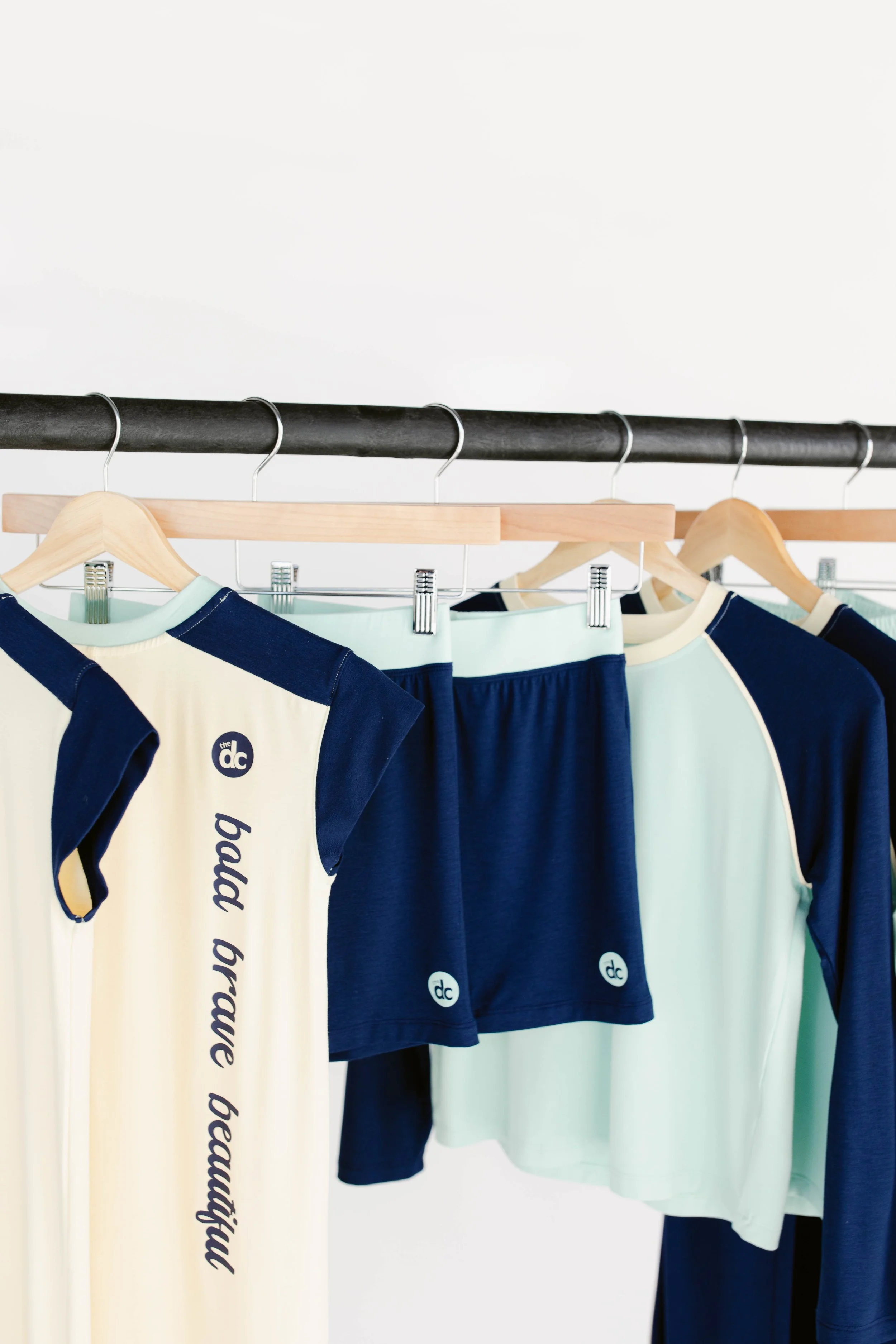
Featuring ARD client, The Decided Collection
In this guide, we'll walk through the key stages of developing a children's sleepwear collection and what founders should consider at each step.
1. Start with the Customer, Not the Pajama
Before you start sketching pajama sets or sourcing cute prints, take a step back.
Who are you actually designing for?
The child may be wearing the product, but in many cases, a parent or guardian is making the purchase. That means you're developing for two audiences with potentially very different priorities.
The child might care about how the pajamas look, feel, or reflect their personality. The parent may be thinking about comfort, durability, ease of care, price, safety, or whether the product will hold up after countless washes.
Understanding both perspectives is an important part of product development.
Start by asking:
Who is the end customer?
Who is making the purchase?
What does the parent care about?
What does the child care about?
What problem or need is the product solving?
What is currently missing from the market?
Why would a customer choose this product over another option?
These answers should influence everything from your assortment and fabric choices to your pricing and product details.
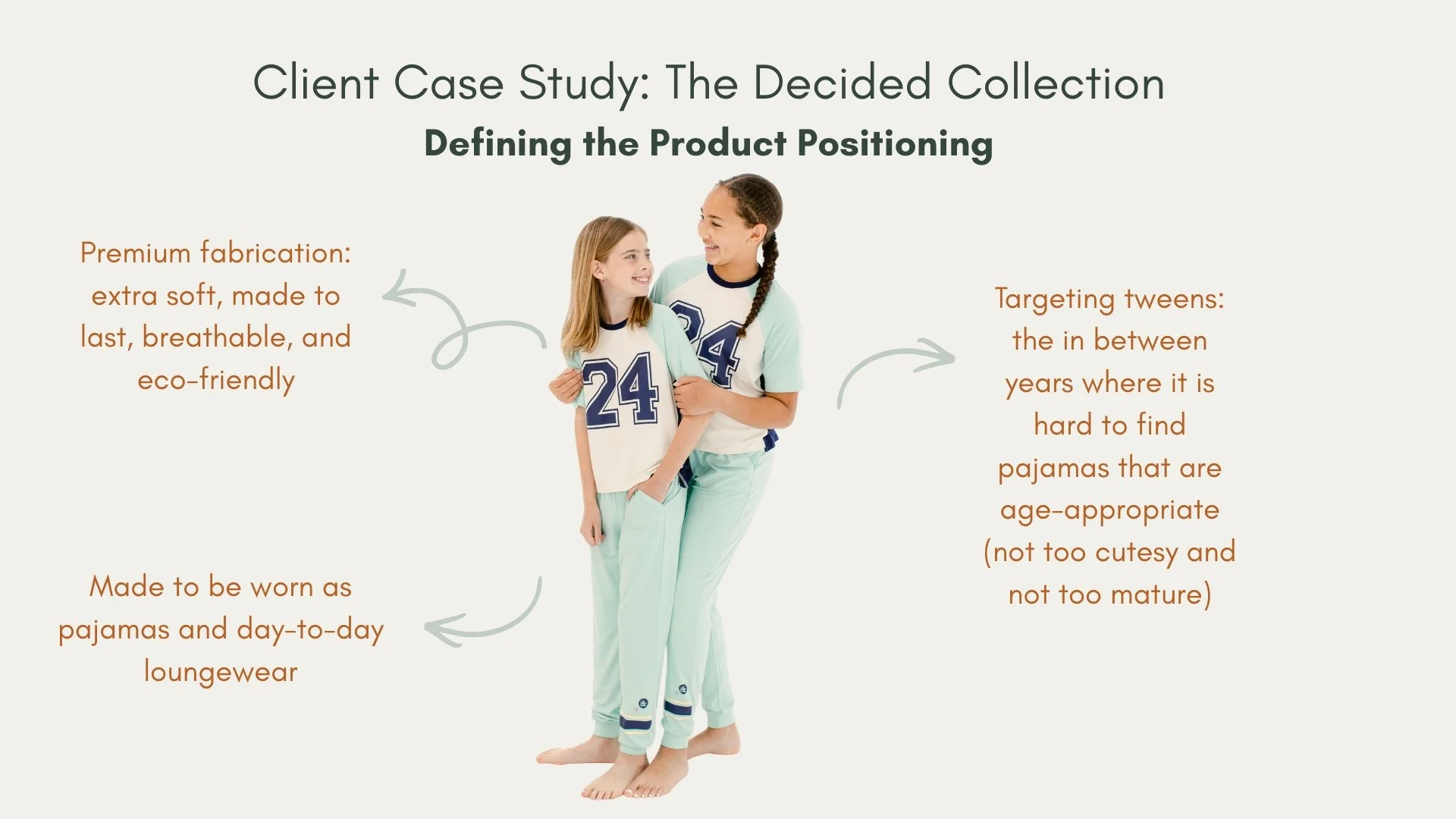
Define Your Product Positioning
Consider:
Age range: Are you designing for toddlers, young children, tweens, or a broader range?
Price point: Where does the collection sit within the market?
Aesthetic: Is it classic, playful, elevated, colorful, minimalist, or something else?
Occasion/use case: Everyday sleep, seasonal gifting, lounging, matching family moments?
Fabric/material positioning: Is softness, breathability, sustainability, or another material benefit central to the product?
Functional benefits: What makes the product easier, more comfortable, or more useful?
Brand differentiation: What makes your children's pajamas different from what customers can already buy?
A strong sleepwear collection starts with a clear customer and product strategy, not just a design concept.
2. Build the Collection & Assortment Strategy
Once you understand who you're designing for, it's time to determine what you're actually going to make.
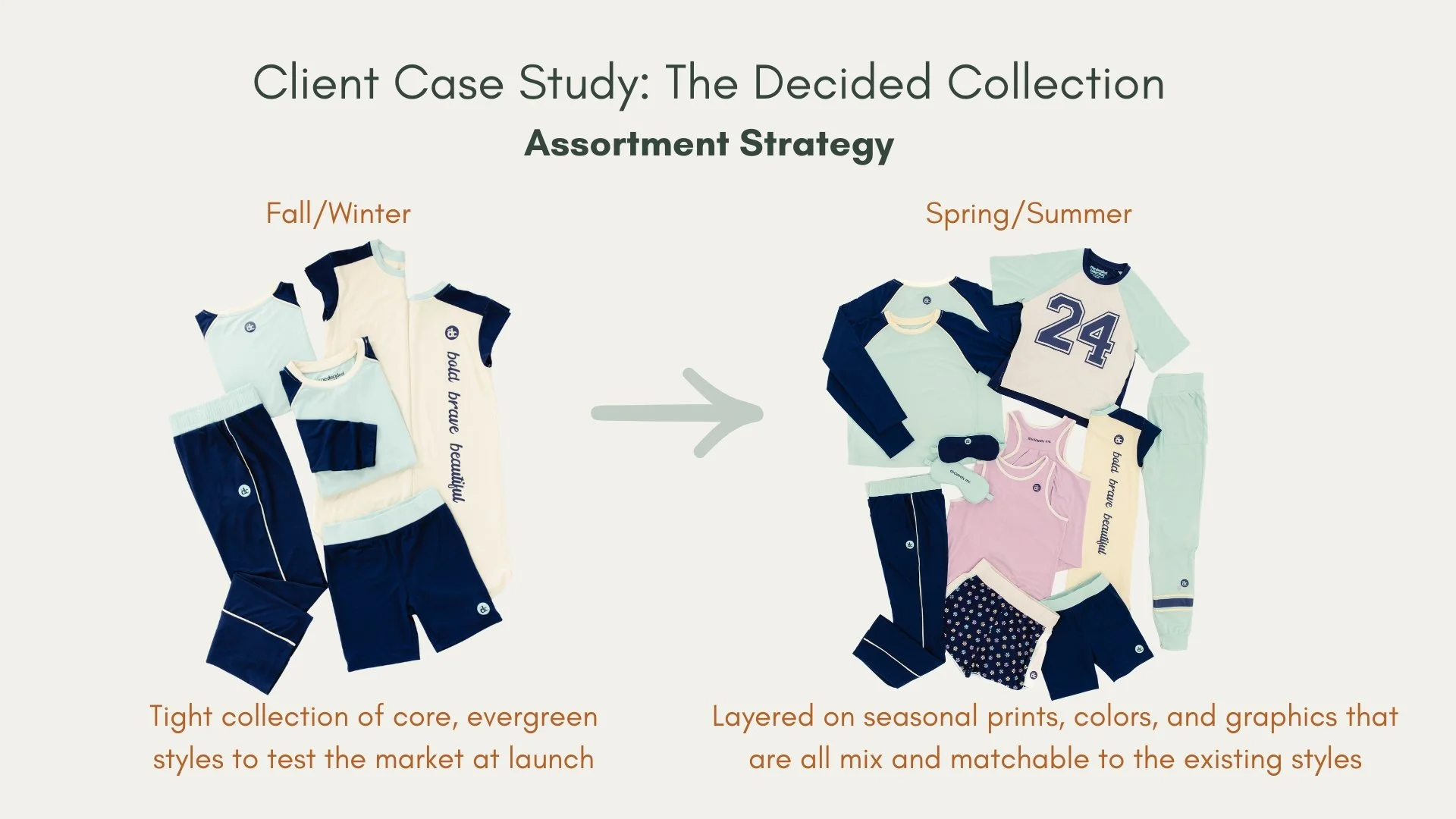
It's easy for a new founder to fall in love with individual designs, but a successful sleepwear collection needs to work as a collection, not just as a group of products that happen to launch at the same time.
Start thinking about the assortment as a whole.
How many styles do you need? Which products are core and which are seasonal? Will you offer pajama sets, separates, nightshirts, robes, or a combination? How broad does your size range need to be?
You'll also need to consider:
Number of styles
Core vs. seasonal styles
Prints vs. solids
Pajama sets vs. separates
Nightshirts, robes, or other sleepwear categories
Size range
Color and print assortment
Opening price points vs. premium offerings
The goal isn't necessarily to offer as much as possible. It's to build an assortment that makes sense for your customer and your business.
Think Beyond the Individual Style
Before adding another color, print, or silhouette to the line, look at how everything works together.
Ask yourself:
Does the assortment feel cohesive?
Is there enough variety without becoming overwhelming?
Are there unnecessary SKUs?
Does the assortment make sense financially?
Can certain styles share fabrics, trims, or components?
Are there opportunities to simplify production without sacrificing the customer experience?
For example, developing multiple styles that use the same base fabric or certain shared components can create efficiencies during sourcing and production.
This is where product development and merchandising strategy start to intersect. You're not just deciding what looks good. You're building a business around the product.
3. Choose the Right Fabrics & Materials
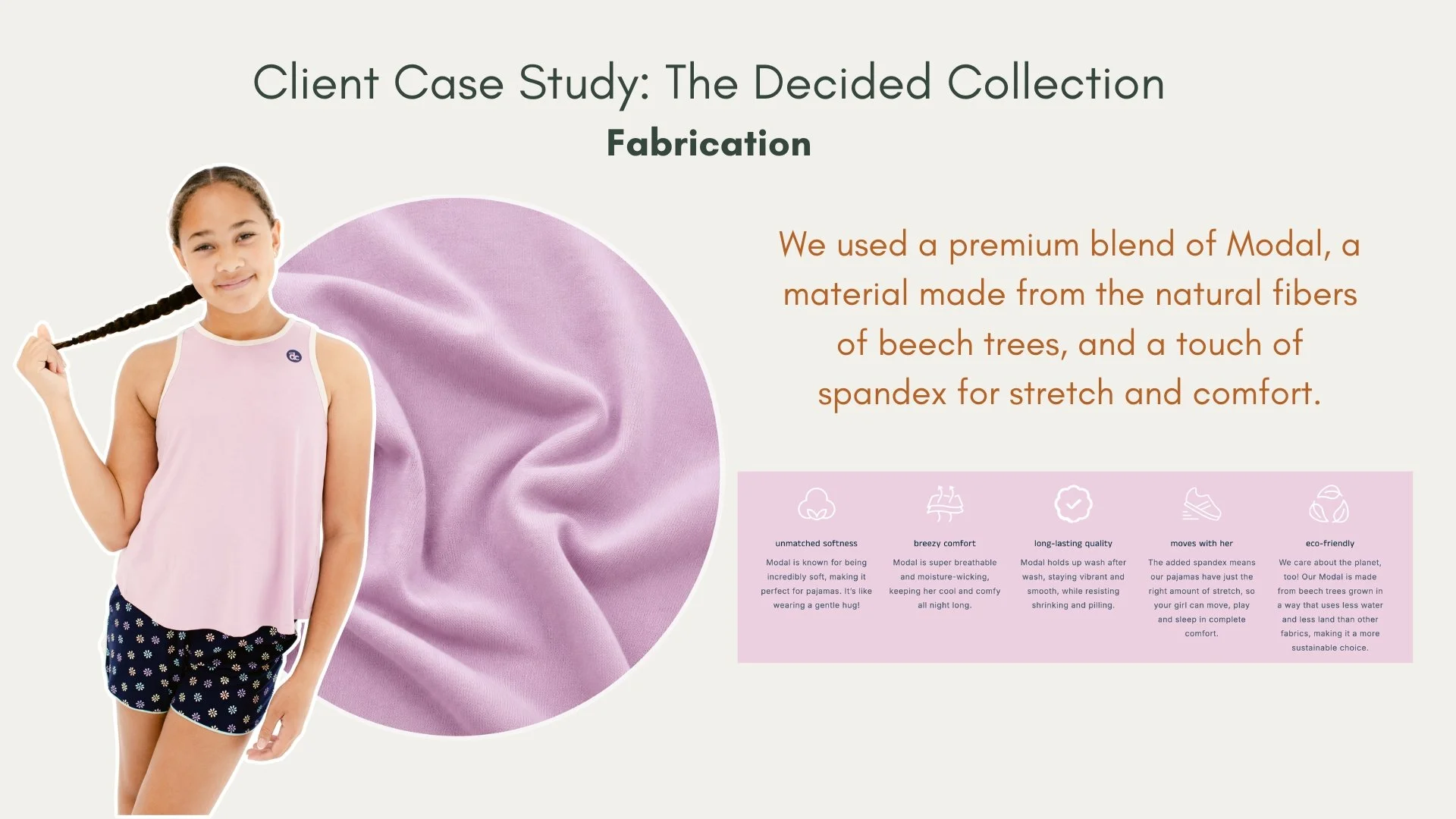
In children's sleepwear, fabric selection is about much more than finding something that feels soft and looks cute.
Children's pajamas need to be comfortable enough to sleep in, durable enough to withstand regular wear and washing, and appropriate for the intended product and market.
As you evaluate materials, consider:
Comfort and hand feel
Breathability
Durability
Stretch and recovery
Fabric weight
Shrinkage
Colorfastness
Fiber content
Care requirements
Suitability for children's sleepwear
And don't wait until sampling to think through these decisions.
The fabric you choose can influence how a garment fits, how it behaves after washing, how it needs to be constructed, and what testing may be required. It can also affect your cost, minimums, sourcing options, and production timeline.
In other words, “I want something soft” isn't quite a fabric specification.
Your product needs more definition than that before you can effectively communicate your requirements to a factory or supplier.
4. Develop the Fit & Size Range
Children's sizing isn't simply a scaled-down version of adult apparel.
Children's bodies change significantly as they grow, which means proportions, ease, and fit need to be thoughtfully considered throughout the size range.
Start by determining the appropriate age and size range for your customer, then establish the measurements and fit intent for each size.
This includes considerations such as:
Age and size ranges
Body proportions
Ease and fit
Growth considerations
Consistency across sizes
Grading
Fit samples
Wear testing and fit feedback
Fit Is About More Than Measurements
A measurement chart can tell you the dimensions of a garment, but it can't tell you whether the garment actually works for the child wearing it.
Can they move comfortably? Does the waistband sit correctly? Are the proportions appropriate? Does the garment feel comfortable while sleeping, lounging, or moving around?
These questions matter even more when developing children's apparel.
A good fit process combines measurements with actual evaluation of the garment on the intended wearer. Fit feedback can uncover issues that aren't obvious on paper, which is why fit samples and wear testing are valuable parts of the development process.

5. Build the Technical Foundation
This is where you can introduce tech packs and technical development.
Cover:
Tech packs
Measurement specifications
Construction details
Stitching
Seam finishes
Labels
Trims
Artwork/print placement
Fabric specifications
Packaging requirements
Grading specifications
Your Tech Pack Is Only as Good as the Information Behind It
Once your product decisions are established, those decisions need to be translated into clear technical information.
This is where tech packs become an important part of the product development process.
A well-developed tech pack can communicate details such as:
Measurement specifications
Construction details
Stitching
Seam finishes
Labels
Trims
Artwork and print placement
Fabric specifications
Packaging requirements
Grading specifications
Think of your tech pack as the technical blueprint for the product. It gives your development and production partners the information they need to understand what you're asking them to make.
If you want to dig deeper into the role of technical documentation, ARD also covers this topic in Apparel Technical Design: The Ultimate Guide For Beginners.
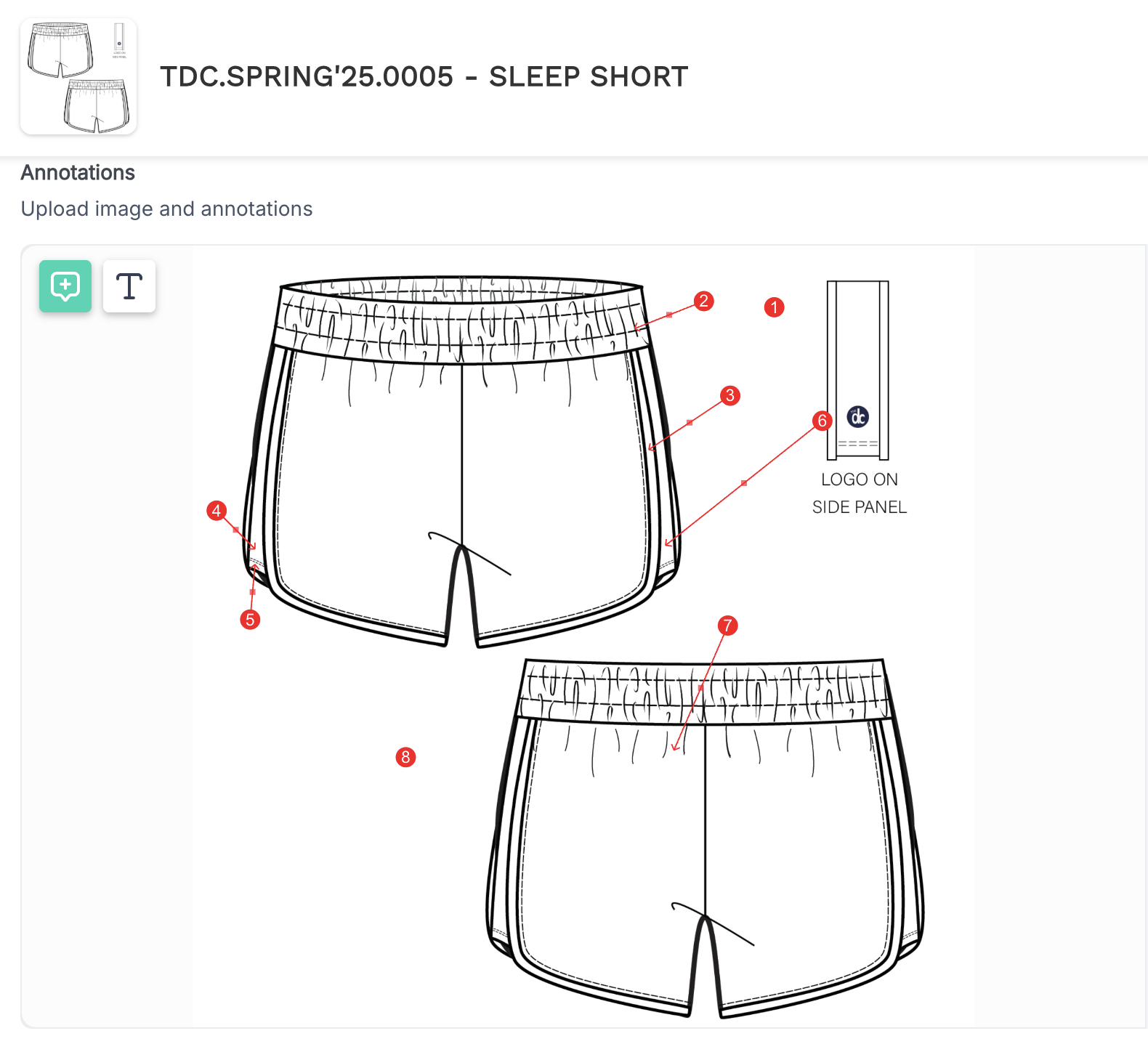
Examples of a flat sketch in a tech pack
6. Understand Testing & Compliance Requirements
When you're developing children's sleepwear, testing and compliance can't be an afterthought.
Children's products are subject to specific and rigorous requirements, and sleepwear can have additional safety considerations. Exactly what applies will depend on factors including the product itself, its construction, materials, intended age range, and the market where it will be sold.
At a high level, founders should be thinking about:
Children's product requirements
Drawcord location, attachment and length
Small parts testing, to avoid choking hazards
Snug fit vs. Loose fit (To comply, you must choose between two distinct regulatory pathways: the Flame-Resistant Pathway or the Snug-Fitting Exemption)
Compliance Testing
Compliance Labeling (Snug Fitting requires a very specific hangtag)
Documentation and Test Reports
When testing should occur during development and production QA
The important thing is to understand these considerations before you get too far into development.
Testing requirements can influence fabric selection, construction, labeling, fit execution and other product decisions. Waiting until the very end of development to investigate them will create costly delays or require changes to a product you thought was already finished.
This isn't intended to be a comprehensive legal or regulatory guide, and requirements can change. Founders should verify the current requirements applicable to their specific products and markets and work with appropriate and trusted 3rd party testing and compliance resources when needed.
ARD's role is to help founders understand what needs to be considered during product development and when specialized testing or compliance support should be brought into the process.
7. Sample, Test, & Refine.
Here’s something every new founder needs to know: your first sample is not your finished product.
Sampling is an opportunity to see how your product decisions translate into a physical garment and identify what needs to be refined before production. It is common to go through 2-3 rounds of sampling and revisions before your garment is approved for production.
With each round, evaluate more than whether you simply like the garment. Look at:
Fit and measurements
Construction and finishing
Fabric performance
Appearance and functionality
Overall quality
Comfortability and Mobility
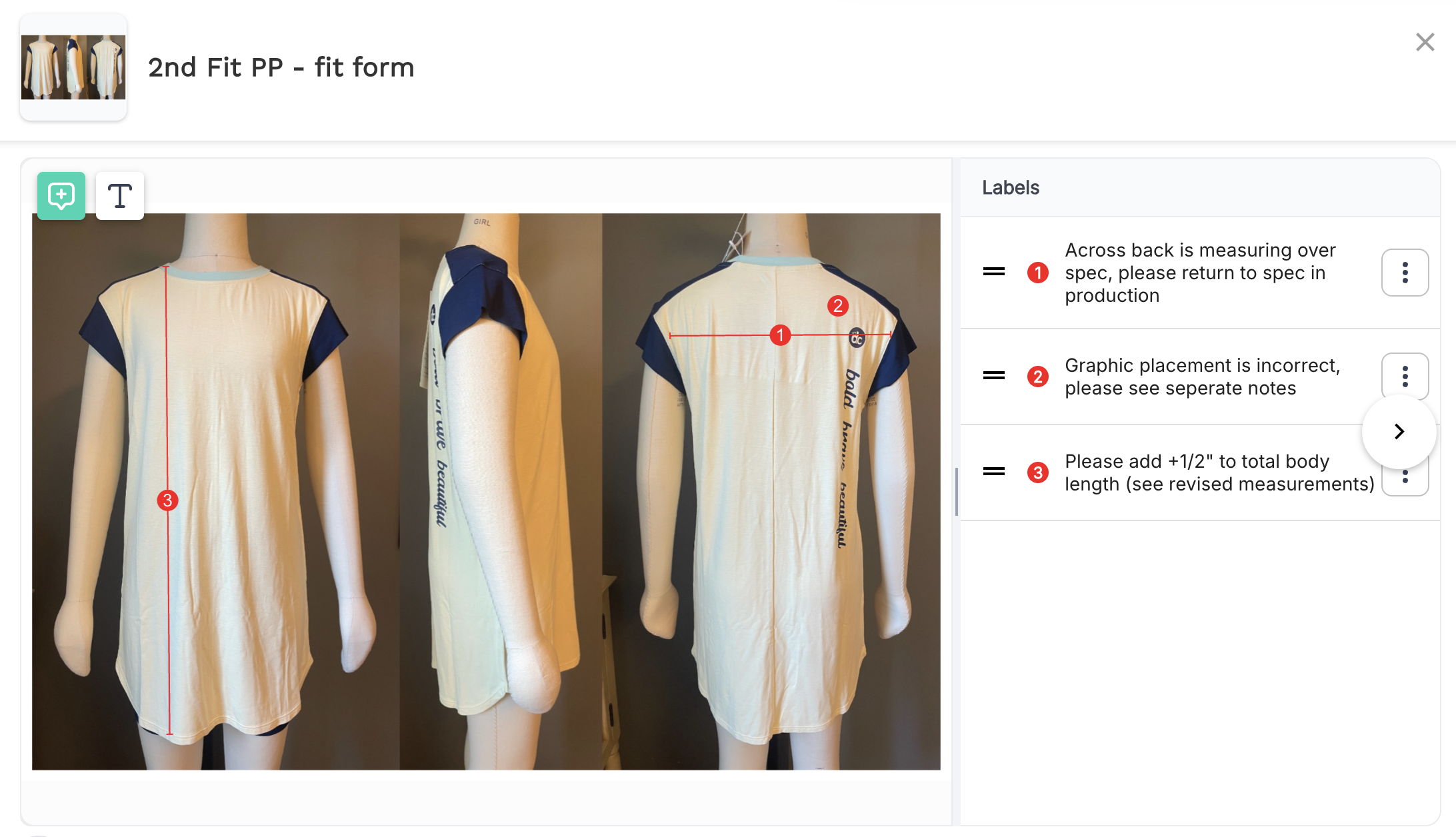
Examples of fitting comments to a vendor
8. Prepare for Production
Once the product has been approved, the focus shifts from development to execution.
At this stage, the factory needs a clear, finalized set of instructions and approvals to move forward.
Key production considerations include:
Approved fit sample
Approved submits such as; colors, graphics, labels, hang tags and polybags
Production quantities and size breakdowns
Purchase orders and confirmed costing
Production timelines
Quality expectations
Pre-production approvals
Factory communication
This is where all of the work you've done throughout product development comes together.
Your sourcing, tech packs, fit approvals, testing, sampling, and final product decisions should provide the foundation for a clear production handoff.
The more ambiguity that remains at this stage, the greater the opportunity for something to be interpreted differently once production begins.
9. Manage Production & Quality Control
The product isn't finished just because the sample was approved.
Production introduces another set of variables, and maintaining consistency between your approved sample and the final production run is an important part of protecting your product and your brand.
Production management may include:
Production follow-up & documentation
Factory communication
Quality control
Pre-shipment inspections
Addressing discrepancies
Maintaining consistency with the approved sample
Final packing list to confirm units produced against units ordered
This is also where founder ownership matters.
You don't necessarily need to manage every factory conversation yourself, but you do need to understand what is happening with your product and what standards have been established.
If something changes during production, you need to know what changed, why it changed, and whether it still aligns with your approved product.
The work doesn't stop when you hand your tech pack to a factory. Product development and production are collaborative processes, and clear communication throughout both helps protect the product you've worked so hard to develop.
If you're navigating this stage for the first time, ARD's production resources can help you better understand what happens between an approved sample and finished goods.
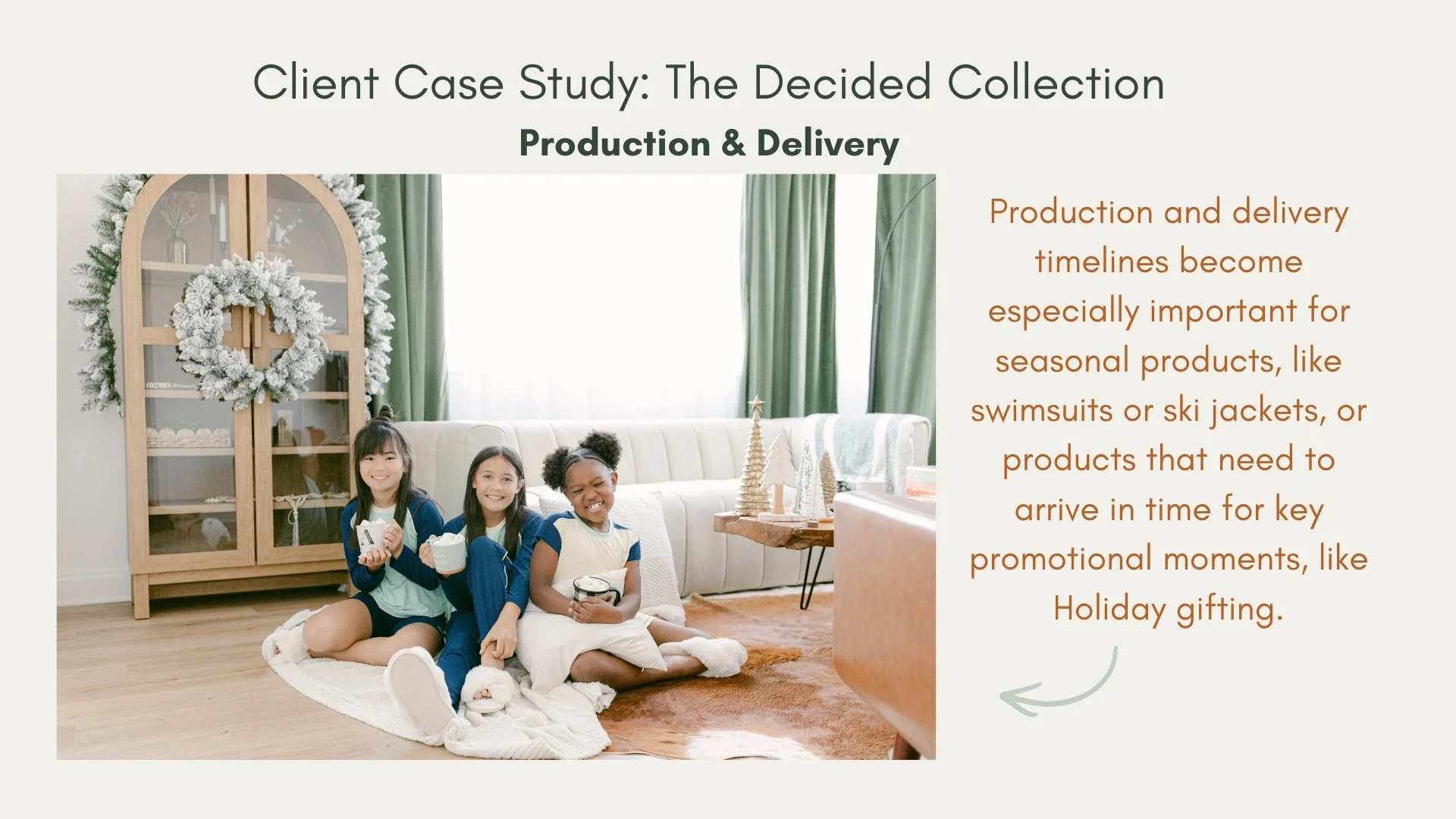
The Foundation of a Successful Sleepwear Collection
Developing a children's sleepwear collection involves far more than creating a great design.
From defining your customer and building your assortment to selecting materials, developing fit, creating tech packs, navigating testing requirements, sampling, sourcing, and managing production, each decision builds on the one before it.
And while these are the key stages, there are countless decisions happening in between.
That's often the part that feels overwhelming to a new founder. You know what you want to create, but you're not always sure what needs to happen next, what you need to know before moving forward, or where to invest your time and resources.
If you're still exploring your fashion brand idea, the ARD Fashion Founder Readiness Workshop is designed to help you build the foundational strategy, clarity, and readiness you need before investing in product development.
If you're ready to bring your children's sleepwear concept to life, ARD Fashion Consulting offers expert product development support to help you navigate the process from concept through production.
Wherever you are in the journey, you don't have to figure it all out alone.