
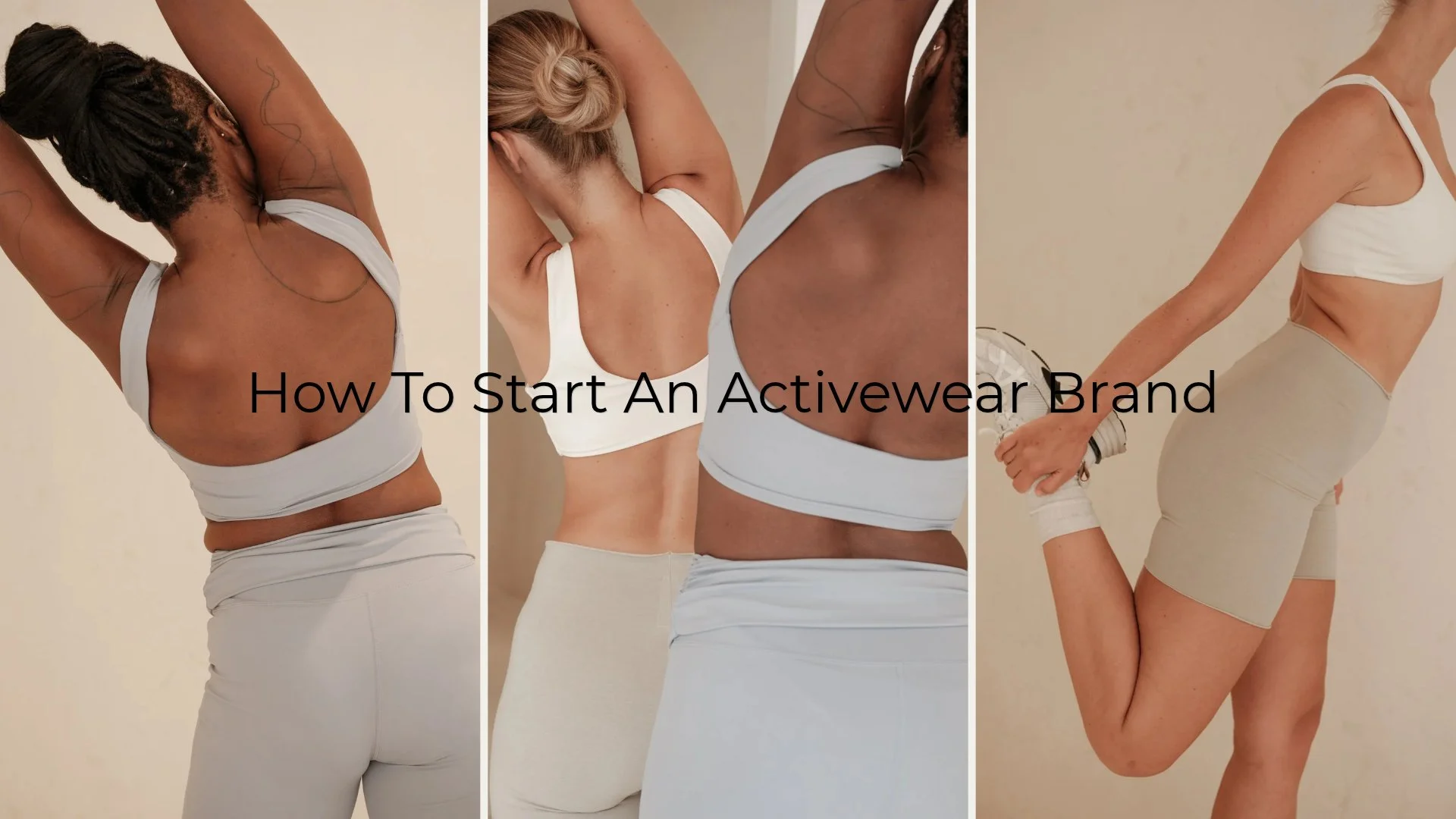
Activewear has evolved far beyond the gym, creating new opportunities for fashion entrepreneurs looking to enter one of the industry's most competitive and fast-growing categories.
But developing a successful collection requires more than a strong brand concept and aesthetically pleasing designs. From performance fabrics and technical construction to fit, sourcing, and manufacturing, there are unique considerations that can make or break your product.
With 25 years of experience in the apparel industry, Amanda Rango, Founder of ARD Fashion Consulting, has helped fashion entrepreneurs navigate the complexities of bringing their product ideas to life. In this guide, Amanda shares what aspiring founders need to know before developing their first activewear collection, including the key product and production decisions that will help set their brand up for success
Breaking Into the Activewear Market
The activewear industry isn't slowing down anytime soon. According to Grand View Research, the global activewear market was valued at approximately $440.4 billion in 2025 and is projected to reach $920 billion by 2033.
Part of this growth comes from the evolution of how consumers wear activewear. Leggings, sports bras, performance tops, and matching sets have become everyday wardrobe staples, blurring the lines between workout apparel and lifestyle fashion.
For emerging brands, this presents an opportunity to serve a consumer who wants more from their clothing. They may prioritize performance and functionality, but they're also looking for thoughtful design, comfortable fabrics, and pieces that fit seamlessly into their everyday lives.
Unlike some other apparel categories, activewear products must balance aesthetics with technical performance. The right fabric, construction, and fit can make the difference between a product that looks great on a hanger and one that actually delivers on its promises.
Before jumping into design, there are several important steps to consider.
Start With Your Customer and Collection Vision
Before designing products, you need to understand who you're designing for and what purpose your collection will serve.
Not all activewear customers have the same needs. Someone shopping for pilates apparel may prioritize softness, flexibility, and comfort, while a runner may be looking for moisture management, support, and performance-driven construction.
Start by defining your target customer and the activities your products will support.
Consider a few different activewear categories:
Low-impact activities: Yoga, Pilates, barre, and studio workouts often call for lightweight, flexible fabrics with a soft hand feel and comfortable stretch.
High-impact activities: Running, HIIT, and strength training may require greater support, compression, moisture management, and secure construction.
Lifestyle-focused activewear: Athleisure and everyday movement collections prioritize versatility, comfort, and style, with pieces that transition from the gym to daily activities.
Once you understand how your customer intends to wear your products, consider what matters most to them. Is it comfort? Compression? Support? Versatility? Sustainability? Price? These considerations will help inform your product decisions and establish a clearer brand identity.
You'll also want to research the competitive landscape. Look at established activewear brands and emerging labels serving a similar customer. What products are they offering? What price points are they targeting? Are there gaps in the market that your brand could address?
The goal isn't to recreate what's already out there. It's to understand the market well enough to identify where your brand can offer something different.
Build a Strategic Product Assortment
Once you've established your customer and brand positioning, it's time to determine what products belong in your first collection.
Depending on your concept, your assortment may include:
Leggings and shorts
Sports bras
Tanks and performance tops
Jackets and layering pieces
Matching sets and accessories
But selecting product categories is only the beginning. You'll also need to consider the different silhouettes and product variations within each category.
For example, leggings can vary by rise, inseam, compression level, waistband construction, and overall fit. Sports bras require consideration of support levels, coverage, strap placement, and intended activity.
Think strategically about how your products will work together. A collection with complementary tops and bottoms creates opportunities for matching sets and multiple-item purchases while giving customers more ways to wear your pieces.
It's also important to be realistic about the size of your first collection. Every additional style, color, and size introduces more development work and inventory investment.
You don't need 20 styles to establish a strong brand. A thoughtfully developed assortment with a few standout products can be a much better starting point. Identify potential hero products that communicate your brand's identity and give customers a reason to choose you over the competition.
Choose the Right Fabrics and Materials
Fabric selection is one of the most important decisions you'll make when developing an activewear collection.
The right material can influence everything from how a garment feels against the skin to how it performs during movement, holds its shape, and withstands repeated washing. Unlike traditional apparel, activewear fabrics need to accommodate movement while maintaining their original structure. This often means incorporating stretch fibers and selecting materials specifically engineered for performance.
Some common fabric compositions include:
Nylon and spandex blends: Known for their softness, stretch, and durability, these blends are commonly used for leggings, sports bras, and other fitted activewear.
Polyester and spandex blends: Often selected for their moisture-wicking capabilities, durability, and ability to retain their shape.
Cotton and spandex blends: Offer a softer, more familiar hand feel and can work well for lifestyle-focused activewear, although they may not provide the same moisture management as synthetic performance fabrics.
Recycled performance fabrics: Made using recycled materials, these can offer similar performance characteristics to conventional synthetic fabrics while supporting a more sustainability-focused brand direction.
Stay tuned for our next blog, where we’ll do a deeper dive into activewear fabrications.
Beyond the fiber composition, there are several fabric characteristics you'll need to evaluate.
Stretch and recovery: Stretch determines how much a fabric can expand, while recovery refers to its ability to return to its original shape. This is especially important for fitted garments like leggings and sports bras.
Moisture management: Moisture-wicking fabrics help move perspiration away from the body, making them particularly useful for high-intensity activities.
Breathability: A breathable fabric allows heat and moisture to escape, helping keep the wearer comfortable during exercise.
Compression: Depending on the intended use, you may want a fabric that offers light, moderate, or firm compression.
Opacity: For fitted bottoms, opacity is an important consideration. Your fabric should provide adequate coverage during movement, including squats, stretching, and bending.
Durability: Activewear is often washed frequently and exposed to repeated stretching. Look for fabrics that can withstand regular wear without excessive pilling, fading, or loss of elasticity.
Before committing to a material, request fabric swatches from potential suppliers. Evaluate the hand feel, stretch, recovery, opacity, and overall quality. Whenever possible, test the material in the context of the actual garment you're developing.
The Rise of Natural Fibers in Activewear
For years, the conversation around natural fibers in fashion has largely centered on sustainability. But today, consumers are looking at fabric composition for another reason: what they're putting against their skin.
As interest in low-tox living, wellness, and material transparency continues to grow, more shoppers are questioning the materials used in their everyday clothing. This is particularly relevant in activewear, where garments are worn close to the body, often for extended periods and during activities that generate heat and perspiration.
Traditional activewear relies heavily on synthetic fibers like polyester, nylon, and spandex. These materials are popular for good reason. They offer stretch, durability, moisture management, and the performance characteristics needed for many types of exercise. However, as consumers become more aware of microplastics and chemical treatments used in textiles, some are reconsidering how much of their wardrobe is made from petroleum-based materials.
Research into textile chemicals and human exposure is still developing, but studies have identified certain compounds in clothing that can migrate into artificial sweat and potentially be absorbed through the skin. While this does not mean that wearing synthetic activewear is inherently harmful, it has contributed to a broader conversation about textile safety, transparency, and material choices.
For brands, this creates an opportunity to think beyond traditional performance fabrics and explore materials that offer a different combination of comfort, functionality, and fiber composition.
Develop Your Designs and Technical Specifications
You've established your customer, identified your product categories, and started exploring fabrics. Now it's time to translate your creative vision into something a manufacturer can actually produce.
This is where design development and technical specifications come into play.
Your initial design concepts may start with sketches, inspiration images, or reference products. But manufacturers need much more detailed information to understand exactly how each garment should be made.
This information is typically organized into a technical package, commonly referred to as a tech pack.
A tech pack serves as the blueprint for your product. It communicates the design, materials, measurements, construction details, and other specifications necessary for manufacturing.
Depending on the product, your tech pack should include:
Technical flats and design illustrations
Fabric composition and material specifications
Construction details and stitching instructions
Seam placement and specifications
Waistband and elastic details
Trims, closures, and branding placements
Colorways and color references
Measurement specifications and sizing information
For activewear specifically, there are several construction details that deserve additional attention.
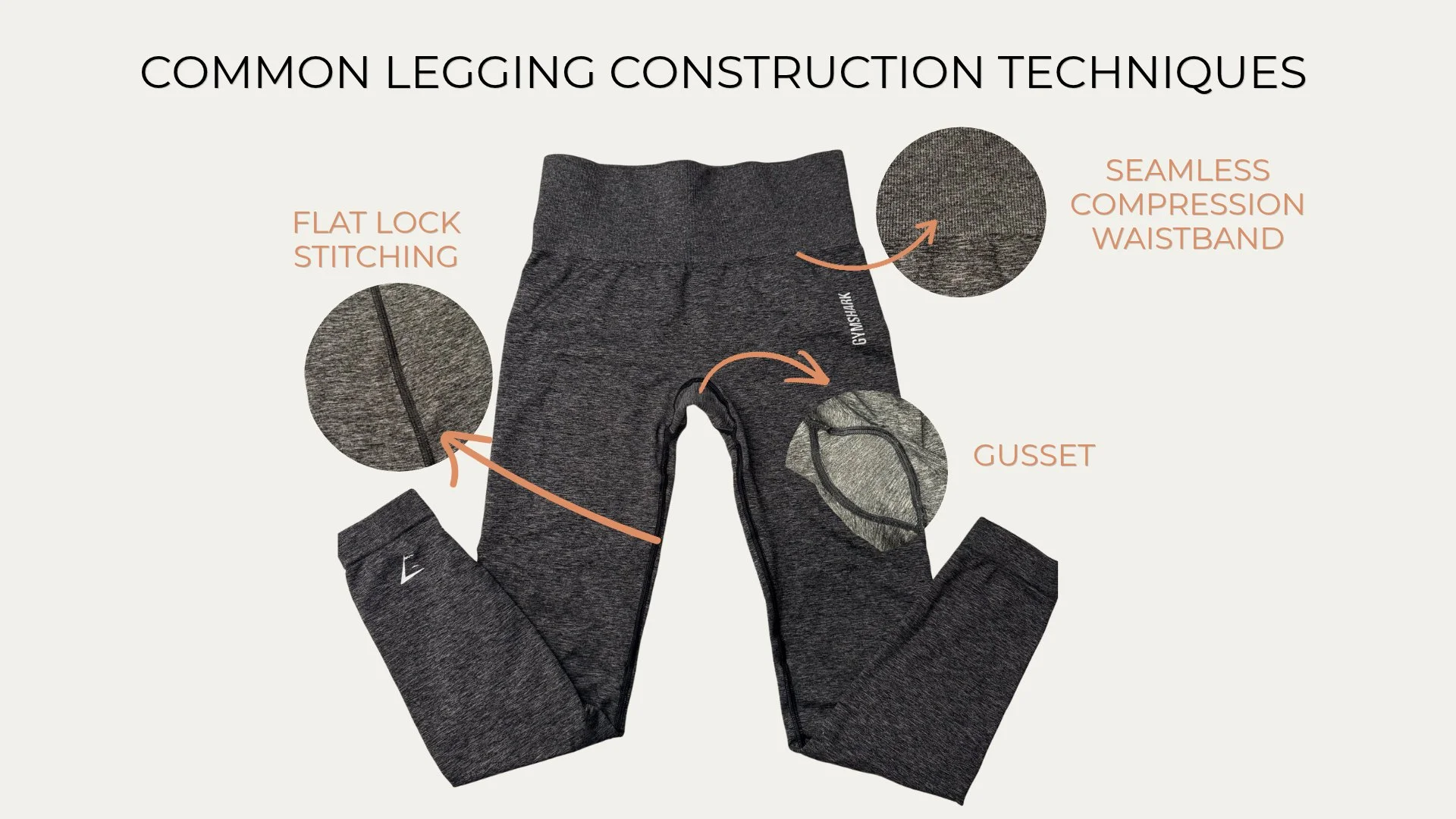
Flatlock seams: These seams are designed to reduce bulk and minimize chafing against the skin, making them a popular choice for performance apparel.
Gussets: Often incorporated into leggings and shorts, gussets provide additional room for movement and can improve comfort and fit.
Waistband construction: The waistband needs to provide the appropriate level of support and stability without rolling, digging into the skin, or slipping during movement.
Supportive bra construction: Sports bras require careful consideration of elastic, lining, strap placement, coverage, and support levels based on the intended activity.
Functional pockets: Pocket placement, depth, and construction should be evaluated to ensure they can securely hold items without interfering with movement.
A well-developed tech pack helps eliminate guesswork, creates consistency throughout the development process, and gives your manufacturing partner a clear understanding of your expectations.
Prioritize Fit, Functionality, and Wear Testing
One of the biggest mistakes an emerging activewear brand can make is assuming that a garment is ready for production simply because it looks good on a sample.
Activewear needs to perform on the body, not just on a hanger.
A pair of leggings can look perfect standing still but tell a completely different story during a workout. The waistband may roll, the fabric may become sheer when stretched, or the garment may shift during movement.
That's why fit development and wear testing are such important parts of the process.
Once your initial samples are ready, evaluate them on actual bodies. Whenever possible, work with fit models who represent your intended customer and consider how different body types may experience the same garment.
You'll want to evaluate your products based on their intended use. For example, a sports bra designed for high-impact workouts will have different performance requirements than a soft, low-support studio top.
Don't forget about wash testing, either. Repeated washing can impact fabric performance, color, shrinkage, pilling, and overall garment quality.
If something isn't working, go back to your manufacturer and make the necessary adjustments to your pattern, materials, or construction.
Sampling and revisions are a normal part of product development. It's much better to identify a problem before bulk production than to discover it after hundreds or thousands of units have been manufactured.
Find the Right Manufacturer and Understand Production
Not every apparel manufacturer has the capabilities or experience needed to produce quality activewear. While some factories specialize in general cut-and-sew apparel, others have more experience working with stretch fabrics, performance materials, and technical sewing techniques.
When researching potential manufacturers, look for experience producing products similar to yours. Ask about their previous activewear projects, fabric sourcing capabilities, sampling processes, and quality control procedures.
Some important questions to ask include:
Have you manufactured activewear or performance apparel before?
What types of stretch fabrics and materials do you regularly work with?
Do you offer fabric sourcing, or will I need to provide my own materials?
What are your minimum order quantities (MOQs)?
How does your sampling and revision process work?
What are your estimated production timelines?
What quality control measures are in place before shipment?
Don't rush this process. Finding the right manufacturing partner is about more than securing the lowest production cost. You want someone who understands your product, communicates effectively, and can consistently meet your quality expectations.
Understand Your Costs, Pricing, and Profit Margins
A product can be beautifully designed and well-made, but it still needs to make financial sense.
Before committing to production, you'll need to understand the costs associated with developing your activewear collection and how those costs will influence your retail pricing.
Some of the expenses to account for include:
Fabric and material costs
Trims, elastic, and embellishments
Pattern development and grading
Sampling and revisions
Manufacturing costs
Packaging and labeling
Freight, duties, and shipping
These expenses contribute to your overall product cost and should be considered when determining your target retail price. We dive deeper into this topic in our blog, The Beginner’s Guide to Understanding Product Costs and Margins in Fashion.” If you want to build a profitable business, this is a good place to start.
Prepare Your Collection for Launch
Getting your products manufactured is a major milestone, but product development doesn't end when your garments come off the production line.
You'll still need to prepare your collection for customers and ensure that all the pieces are in place for a successful launch.
Start by establishing a product development calendar and working backward from your desired launch date. This should account for final design approvals, production timelines, shipping, photography, marketing, and inventory preparation.
As you get closer to launch, consider the following:
Finalize product information. Develop accurate product descriptions, sizing information, fabric details, and care instructions. For activewear, customers want to understand how a product fits, feels, and performs before making a purchase.
Plan your product photography. Your imagery should communicate both the aesthetic and functionality of your collection. Consider a combination of traditional product photography, lifestyle imagery, and movement-focused content that demonstrates how the garments perform.
Develop your marketing strategy. Think about how you'll introduce your brand, communicate your product differentiators, and build anticipation before launch. Social media, influencer partnerships, email marketing, and product education can all play a role.
Establish your inventory strategy. Make sure your initial inventory aligns with your assortment, anticipated demand, and available budget. You'll also want to consider how you'll manage restocks and size availability.
Your launch shouldn't be treated as the finish line. The insights you gather from your first collection will help inform future product development and give your brand a stronger foundation as it grows.
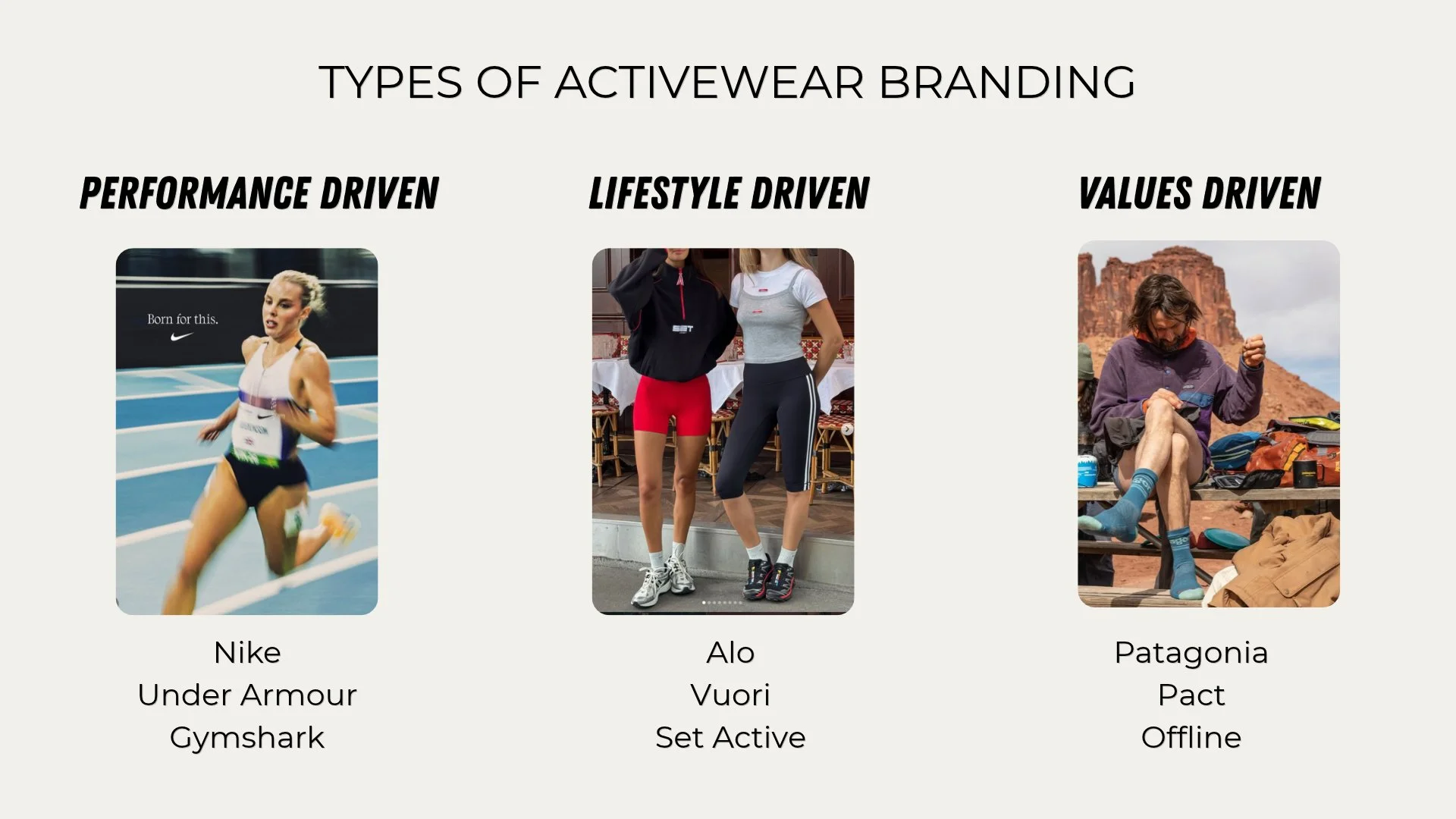
With so many activewear brands on the market, it’s important that your marketing communicates a clear point of view, as in the examples above.
Build an Activewear Collection With the Right Foundation
Launching an activewear brand requires a balance of creativity, technical expertise, and business strategy.
From defining your customer and selecting the right fabrics to developing tech packs, evaluating fit, and finding the right manufacturing partner, every decision plays a role in the final product.
And while the process can feel overwhelming, you don't need to know every technical detail to get started. What you do need is a clear vision, a willingness to learn, and the right partners to help bring your ideas to life.
At ARD Fashion Consulting, we help emerging and established fashion founders navigate the apparel product development process, turning creative concepts into thoughtfully developed, production-ready products.
Whether you're still exploring your activewear concept or ready to start developing your first collection, we're here to help you understand what comes next.