
Many boutiques start with white-label products to test demand, build an assortment, and get their business off the ground. As they grow, some transition to private labeling to add branded finishing details and create a more cohesive customer experience. But eventually, existing products may fall short of a boutique’s needs, whether that means inconsistent fit, quality concerns, or limited opportunities to stand out in a crowded market.
With more than 25 years of experience in the apparel industry, ARD Fashion Consulting founder Amanda Rango has worked with boutique owners to navigate these challenges and build stronger product assortments.
If existing styles are no longer aligning with your brand’s vision, it may be time to explore custom design. In this article, Amanda shares five signs your boutique may be ready to take the next step.

1. You’re Struggling to Maintain Consistent Fit Across Your Assortment
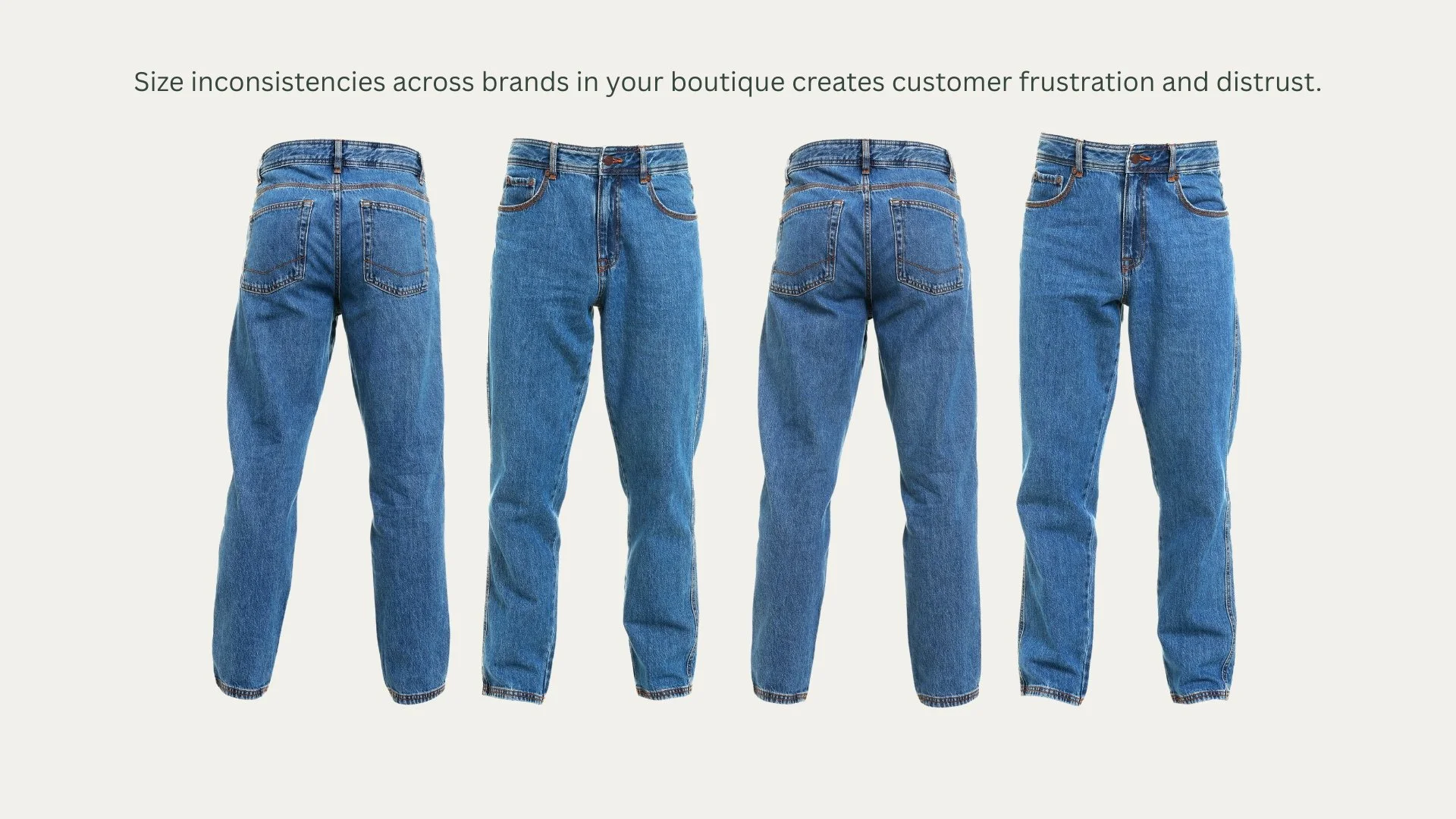
Have you ever ordered two styles from different suppliers in the same size, only to find that one fits perfectly while the other feels like it belongs to an entirely different size chart? You're not imagining things.
Different manufacturers work with different sizing standards, base measurements, patterns, and grading rules. Even when two garments are labeled the same size, their proportions and fit can vary significantly. When your assortment comes from multiple suppliers, maintaining a consistent fit experience becomes even more challenging.
And your customers notice. Inconsistent sizing can lead to frustration, returns, and a lack of confidence when shopping your collection.
The Benefits of Establishing Your Own Fit Standards
Custom design allows you to establish fit standards that reflect your brand and the customer you're designing for.
Rather than relying entirely on a supplier's existing specifications, you can develop your own measurements, refine patterns, and conduct fit sessions to evaluate how a garment performs on the body.
The goal isn't simply to make every garment fit the same way. A fitted top and an oversized sweatshirt should feel different by design. It's about creating consistency within your intended fit, so customers know what to expect when they shop your brand.
2. You Want More Control Over Product Quality
When you're sourcing existing styles, you're often working within the boundaries of what a supplier already offers. That may mean settling for a fabric that isn't quite right, a finish that falls short of your expectations, or construction details you'd prefer to change.
You might love the overall design but wish the fabric felt more substantial or the finishing was more refined. And your customers may love how a product looks when it arrives, only to find that it doesn't hold up as expected after repeated wear and washing.
Over time, these compromises can affect more than the product itself. They can influence customer satisfaction, repeat purchases, and how customers perceive your brand.
Setting Your Own Quality Standards With Custom Design
Custom design allows you to make more intentional decisions about the details that shape your product.
From fabric composition and weight to stitching, trims, closures, and finishing, you have greater opportunity to define what quality means for your brand. You can establish specifications that align with your price point, intended use, and customer expectations before production begins.
Of course, developing a custom product doesn't automatically guarantee a better one. Material selection, sampling, testing, manufacturer capabilities, and quality-control procedures all play a role in the final result.
The difference is that you're building the product around your requirements rather than trying to make an existing design fit them.
3. You’re Ready to Build a More Distinctive Brand Identity
Let's be honest: if several boutiques are sourcing from the same suppliers, their product assortments can start to look remarkably similar.
You can have beautiful branding, thoughtful marketing, and a clear vision for your business, but if your products look just like everyone else's, it can be difficult to give customers a compelling reason to choose your boutique over another.
White-label products can help you establish your assortment, but they may also limit how much differentiation you can achieve through the product itself.
How to Make Your Boutique Stand Out
Your brand identity should extend beyond your logo, packaging, and Instagram feed. It should be reflected in the products you sell.
Custom design gives you the opportunity to develop signature silhouettes, distinctive details, and cohesive collections that feel intentional and recognizable. Maybe it's a particular neckline, a unique combination of fabrics, a more considered proportion, or a design detail that becomes synonymous with your brand.
These decisions help translate your brand's point of view into something customers can see, feel, and wear.
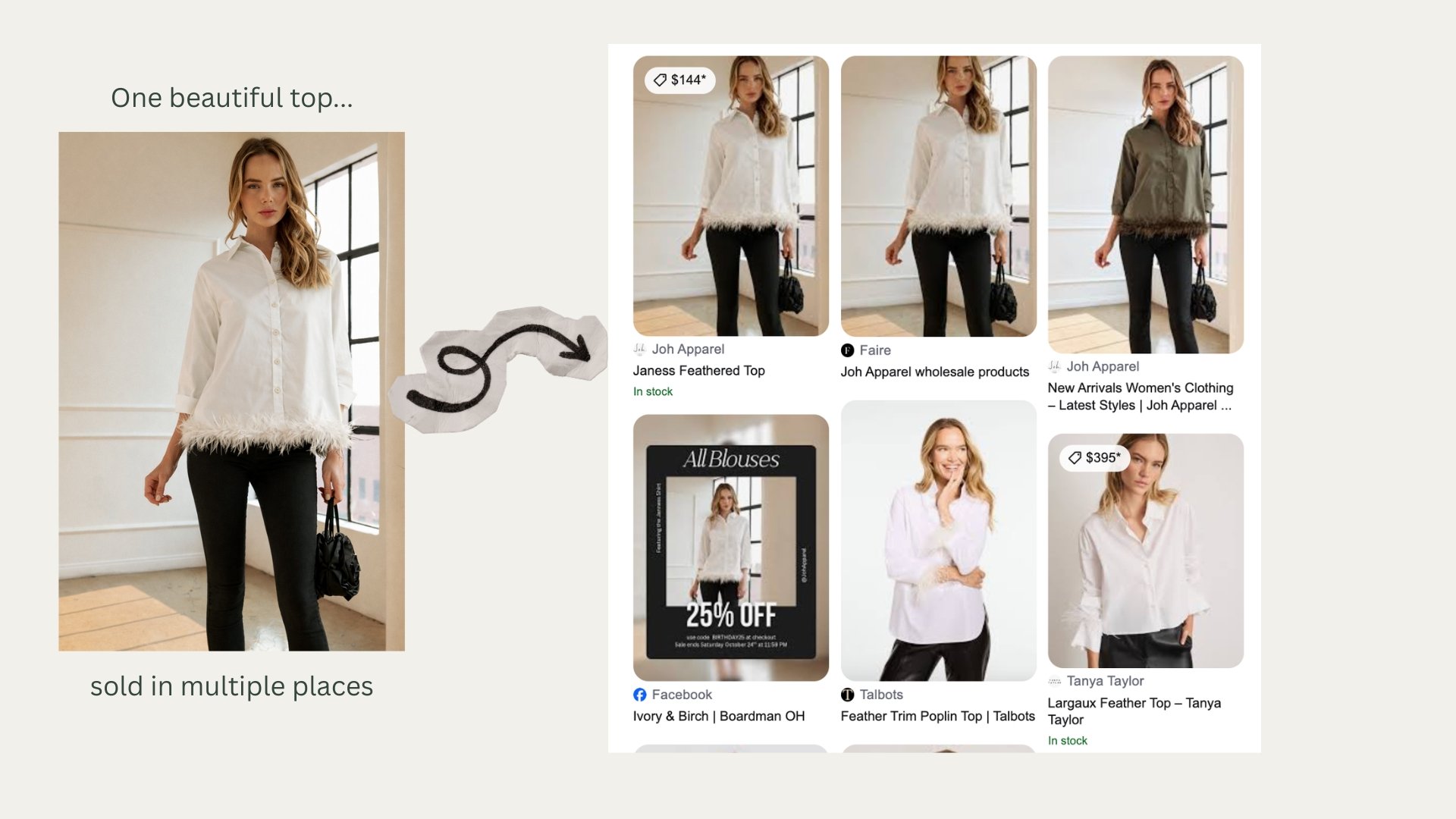
While competition is healthy, it can be difficult to stand out when selling only white-labeled products.
4. You Have Bestsellers You Want to Make Your Own
Your sales data can tell you more than which products are selling. It can help you understand what your customers want more of.
If a particular silhouette consistently sells through, customers repeatedly request a style in additional colors, or you receive positive feedback about a specific feature, pay attention. Those patterns can reveal opportunities to develop products that build on what's already working.
You don't always need an entirely new concept to create something valuable. Sometimes, your next great product starts with a bestseller you already carry.
Turning a Proven Favorite Into a Signature Product
A successful white-label style can provide a useful starting point for custom development. Rather than abandoning a proven product, consider how you could evolve it to better serve your customer and strengthen your assortment.
Could you refine the fit? Introduce a fabric that better aligns with your quality standards? Add a distinctive design detail? Develop complementary styles that turn a single bestseller into a cohesive product story?
Your sales history, customer feedback, return reasons, and sell-through data can help inform those decisions. Together, they offer insight into which product attributes are worth retaining and where there's room for improvement.
The key is to distinguish between what makes the existing product successful and what you want to change. Custom design should build on what you've learned, not discard it.
5. You Have a Clear Vision for Products That Don't Exist Yet
Sometimes, the biggest sign you're ready for custom design is that you know exactly what you want to create, but you can't find it anywhere.
Maybe you've envisioned a specific silhouette that no supplier seems to offer. Perhaps you want to combine the functionality of one garment with the aesthetic of another, or you have a particular fabric, construction method, or design detail in mind.
You've searched the market, explored your sourcing options, and still haven't found the right fit for your vision.
At this point, continuing to search for an existing product may be keeping you from pursuing an opportunity worth developing.
Turning Your Ideas Into Development
Having a great idea is an important starting point, but turning that idea into a production-ready garment requires a plan.
Your concept needs to be translated into clear product specifications that communicate exactly what you're asking a manufacturer to create. Depending on the product, this may include measurements, construction details, material selections, trims, artwork, etc.
This is where tech packs become essential. A well-developed tech pack documents the details a manufacturer needs to develop and reproduce your product, reducing ambiguity and providing a reference throughout the development process.
From there, the process may include sourcing materials, creating samples, conducting fit sessions, making revisions, confirming costs, and approving the final product before production begins. Read our latest blog, “How to Develop a Private Label Clothing Line for Your Boutique,” to get an understanding of the process.
It can feel like a lot of moving pieces, especially if you're navigating product development for the first time. If you have a clear vision but aren't sure how to translate it into a product, you don't have to figure out every step on your own.
Ready to Take the Next Step?
White label and custom design each have a place in a fashion business. White label can be an effective way to test demand, build an assortment, and get your business moving. Custom design offers greater opportunity to shape the products themselves, from fit and quality to differentiation and original concepts.
The right approach depends on your goals, your customer, and the resources you have available. You don't need to rush into custom development simply because your business is growing. But if you're consistently running into the same limitations, it may be time to explore another path.
At ARD Fashion Consulting, we help fashion founders turn their product ideas into actionable development plans. Whether you're refining an existing concept or building a custom collection from the ground up, the right foundation can help you move forward with greater clarity and confidence. Connect with ARD Fashion Consulting to discuss your product development goals and determine what your next step could look like.