
What You Need Before Starting a Fashion Brand: A Pre-Launch Checklist
You don’t need millions or a fashion degree to start a brand. At ARD Fashion Consulting, we work with purpose-driven founders, from former corporate leaders to creative entrepreneurs, who may not come from a fashion background but bring a big vision and a desire to build something meaningful.
This pre-launch checklist will help you lay the right foundation before investing in design or production, so you can build a brand that lasts.
Whether you’re:
Launching your first product
Pivoting from print-on-demand to custom design
Or turning your passion into a real business
This guide is your roadmap to start intentionally, not reactively.

Why Most Fashion Brands Struggle Before They Even Launch
The biggest myth in fashion entrepreneurship?
“Just start—you’ll figure it out as you go.”
In reality, most early-stage brands hit roadblocks long before they ever reach production, not because of bad ideas, but because of unclear foundations.
At ARD Fashion Consulting, we’ve seen it time and time again: founders dive into product development or spend thousands on samples before fully understanding their market, brand, or customer.
The result?
Costly course corrections, wasted time, and burnout before the first sale.
This blog is designed for first-time fashion founders, pivoting entrepreneurs, and side-hustlers turning their idea into a real business. If you're dreaming of your first launch in 2026 or beyond, this checklist is here to help you avoid the most common (and expensive) missteps, and give you a clear path to start with confidence, not chaos.
Let’s begin with the first, and arguably most important step, knowing the market you’re entering.
Market Research: Know Where You’re Entering
Before you sketch a single design or pick a name, you need to understand the world your brand is about to enter.
Too often, new founders get excited about a product idea before doing the groundwork to understand…
Who else is already serving their customer
How saturated the category is
What true white space (if any) exists.
But your product doesn’t exist in a vacuum, and neither does your customer.
Market research gives you the clarity to design with…
purpose
price with confidence
make decisions that are rooted in data, not guesswork.
Think of it as building your runway before you take off, so you're not launching into the unknown.
Up next, we’ll walk you through three key research areas every founder needs before starting development: your customer, your competitive landscape, and your market positioning.
Ready to dig in?
Defining Your Target Customer (beyond age + gender)
If your customer profile says “Women, ages 25–40,” that’s not a strategy, that’s a demographic.
To build a strong brand, you need to understand your customer on a behavioral and emotional level, not just a statistical one.
Ask yourself:
What problem is she trying to solve when she shops?
What brands does she currently buy and why?
Where does she shop (online, boutique, marketplace)?
What does she value most: price, sustainability, exclusivity, comfort, status?
What frustrates her about existing options?
This is where many founders confuse direct and indirect competitors.
A direct competitor sells a similar product at a similar price point to a similar customer.
An indirect competitor might solve the same problem in a different way. For example, if you’re launching elevated loungewear, your indirect competition might include activewear brands, fast-fashion retailers, or even resale platforms.
If you haven’t already, we break this down in detail in our guide to competitive analysis. It’s a must-read before development begins.
When you define your customer clearly, you:
Design with intention
Speak directly to the right audience
Avoid trying to “be for everyone” (which usually means resonating with no one)
Clarity here saves you thousands later.

An example of how you might begin to break down customer profiles
Understanding Price Points and Positioning in Your Category
Price is not just a number; it’s positioning.
Before designing, research:
The low, mid, and premium price tiers in your category
What customers expect at each tier
How competitors justify their pricing (fabric, fit, branding, experience)
If similar dresses retail for $78–$128, launching at $240 requires a very clear value proposition.
Likewise, underpricing can signal lower quality and hurt brand perception.
Look for:
Over-saturated categories with little differentiation
Gaps in sizing, lifestyle niche, or aesthetic
Opportunities where customers are underserved
The goal isn’t to “find something no one is doing.” It’s to find a way to do it with a clearer point of view.
How Much Research is Enough (and when to stop)
Research is essential. Perfectionism is expensive.
You don’t need a 60-page market report to begin. You need:
Clear customer insight
Awareness of competitors
A realistic price range
If you find yourself endlessly researching without taking action, that’s fear disguised as preparation.
At ARD Fashion Consulting, we help founders translate research into a clear development plan so they can move forward without second-guessing every decision.
The goal is progress, not paralysis.
Brand Identity: More Than a Logo
Once you understand your market, your brand identity becomes your compass.
Your brand should guide decisions, not be something you “figure out later” after samples arrive.
From product naming to marketing copy to photoshoot styling, your brand identity influences everything.
Strong brands feel cohesive because they were intentional from day one.
Brand mission, vision, and values
Your mission explains why you exist today.
Your vision describes where you’re going.
Your values guide how you operate.
This isn’t corporate fluff; it’s strategic clarity.
For example:
Patagonia is rooted in environmental activism, influencing everything from materials to marketing.
Skims built its brand around inclusivity and solution-driven design.
Nike centers performance and empowerment, consistently reinforcing it through product and storytelling.
When your mission is clear, decisions become easier:
Which fabrics align?
Which manufacturers fit your ethics?
Which partnerships make sense?
Without this direction, each choice feels confusing and poorly aligned to one another.
Visual Identity Basics (logo, color palette, typography)
Your visual identity is how your brand speaks without words.
It includes:
Logo – Your primary brand mark
Color Palette – The emotional tone of your brand
Typography – The fonts that shape your communication
Imagery Direction – How your brand shows up visually
Together, these create consistency across:
Website
Packaging
Social media
Lookbooks
Line sheets
A strong visual identity ensures your brand is recognizable and memorable.
This is especially important before photoshoots and packaging development. Rebranding after sampling is significantly more costly than doing it right from the start. Additionally, factories and vendors won’t take you seriously without this step.
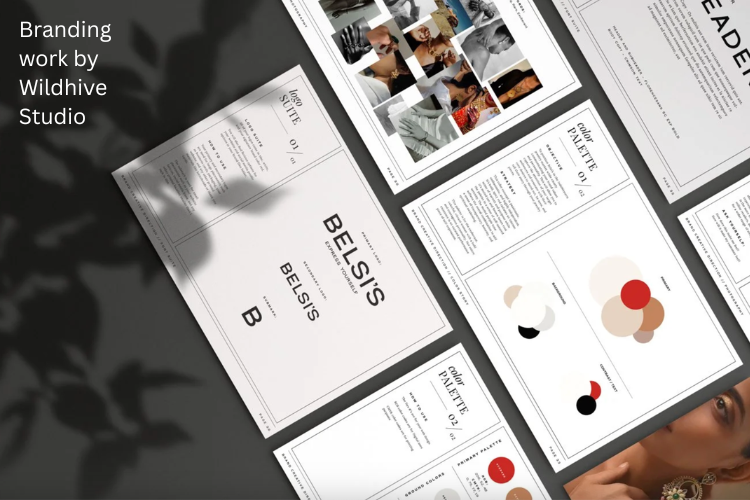
An example of branding deliverables by Wildhive Studio - Logos, typography, colors, etc.
ARD Recommended Partner: WildHive Studio
For founders looking for refined, editorial-level creative direction and visual branding, WildHive Studio is another trusted partner.
They focus on:
Elevated brand visuals
Packaging design
Art direction
Cohesive brand storytelling
Their aesthetic-driven approach is especially powerful for lifestyle and fashion brands preparing for launch.
Explore their portfolio at:
https://www.wildhivestudio.com

ARD Recommended Partner: Branding with B
For founders who need expert guidance in building their brand identity from the ground up, we often recommend Branding with B.
They specialize in:
Brand Development
Website Design
Fractional Marketing
Their approach is collaborative and rooted in building brands that feel authentic, not templated.
You can explore their work at:
https://www.itsbrandingwithb.com/

Legal & Trademark Support: Protect Yourself Early
This is the step many founders delay—and later regret.
Before investing in a product, you need to ensure you legally own what you’re building.
Business Formation Basics
Choosing your business structure impacts taxes, liability, and scalability.
Sole Proprietorship
Simple to set up
Lower upfront cost
No legal separation between you and the business
Higher personal liability risk
LLC (Limited Liability Company)
Separates personal and business liability
Flexible tax options
More credibility with vendors and investors
Requires formal filing and annual fees
Many fashion founders choose an LLC for protection and professionalism, but the right choice depends on your long-term goals. Learn about other types of business structures like partnerships and S corporations here.
Trademark Searches and Why They Matter
Before you:
Design packaging
Build a website
Print labels
You need to confirm your name isn’t already protected.
Skipping this step can result in:
Forced rebrands
Legal disputes
Inventory you can’t legally sell
Ideally, you should conduct a trademark search before finalizing your brand name and file for protection once you’re serious about moving forward.
It’s significantly more affordable to protect early than to defend later.
ARD Recommended Partner: Storylock Legal
For trademark and copyright support, we often refer founders to Storylock Legal, led by Lauren Bercuson.
They specialize in:
Trademark searches and filings
Copyright protection
Creative entrepreneur legal strategy
Lauren understands founder psychology and the creative industry, making legal protection feel accessible instead of intimidating.
Learn more at:
https://www.storylocklegal.com

Financial Readiness: Understanding the Real Costs
You don’t need millions to start a fashion brand, but you do need a realistic understanding of where your money will go.
Based on our ARD Investment Forecast framework, most fashion startups fall into one of three paths: Lean, Standard, or Premium, depending on their goals, quality expectations, and growth timeline.
Phase 1: Brand & Legal Foundation
(Brand identity, legal setup, trademarking)
Lean: ~$3,000–$6,000
Standard: ~$8,000–$15,000
Premium: $15,000–$30,000+
Phase 2: Product Creation & Production
(Design, tech packs, sampling, first production run, packaging)
Lean: ~$10,000–$30,000
Standard: ~$30,000–$80,000
Premium: $80,000–$150,000+
Phase 3: Digital Ecosystem
(Website, ecommerce setup, product photography, content)
Lean: ~$2,000–$6,000
Standard: ~$8,000–$20,000
Premium: $20,000–$50,000+
Phase 4: Launch & Marketing
(Go-to-market strategy, PR, ads, influencer partnerships)
Lean: $2,000–$5,000/month
Standard: $8,000–$20,000/month
Premium: $25,000+/month
What this means:
A thoughtful, small-batch launch can realistically require $15,000–$40,000 in startup capital. A more robust, brand-forward launch often lands in the $60,000–$150,000+ range before significant scaling.
Understanding Cash Flow vs. Profit
Profit is what’s left after expenses.
Cash flow is what’s available in your bank account right now.
Fashion businesses are cash-heavy upfront:
You pay for samples before selling.
You pay for production before delivery.
You pay for marketing before revenue.
Many brands fail not because they aren’t profitable, but because they run out of cash before scaling.
Planning for this gap is critical.
Budgeting for Mistakes and Learning Curves
Underestimating costs is the #1 stressor we see in new founders.
Common surprises:
Additional sampling rounds
Fabric minimums
Minimum Order Quantities (MOQ’s)
Shipping and freight costs
Packaging upgrades
Photography
Build a contingency buffer of at least 15–25%. Expect learning curves. Build room for them.
Stress decreases when expectations increase.
How ARD Fashion Consulting Supports Founders Pre-Launch
At ARD Fashion Consulting, we don’t just design products, we help founders build smart foundations.
Our pre-launch support includes:
Hourly strategy consulting
Market and positioning clarity
Development roadmapping
Vendor partnerships
Tech pack and sampling oversight
Launch readiness planning
Because launching a fashion brand isn’t just about making beautiful pieces.
It’s about building something sustainable.
If you’re preparing for a 2026 launch and want to start intentionally, book a discovery call or explore our consulting services to take your next step with clarity and confidence.