
Predicting Demand: A Fashion Founder’s Guide to Inventory and Demand Planning
One of the biggest challenges fashion founders face isn’t just creating great products; it’s knowing how much inventory to invest in, and when.
Order too little, and you risk stockouts, missed sales, and frustrated customers. Order too much, and suddenly your cash flow is tied up in excess inventory that may take months to move.
At ARD Fashion Consulting, we’ve seen firsthand how inventory planning can either support healthy growth or quietly create operational and financial stress behind the scenes.
This guide breaks down the fundamentals of inventory planning, the most common forecasting mistakes fashion brands make, and how founders can start building smarter inventory strategies that support long-term growth and healthier margins.

Inventory planning impacts far more than how many units you order.
It influences your cash flow, production timelines, warehouse capacity, customer experience, and ultimately, your profitability as a brand. The stronger your forecasting systems become, the easier it is to scale with confidence.
Why Inventory Planning Matters In Fashion
Inventory is often one of the largest financial investments a fashion brand makes, especially as production quantities begin to increase.
Without strong planning, brands can quickly find themselves dealing with:
Excess markdowns
Deadstock inventory
Missed sales opportunities
Cash flow strain
And unlike many industries, fashion inventory is highly time-sensitive. Trends shift, seasons change, and customer demand evolves quickly. Products that don’t sell within the right window often become increasingly difficult to move profitably.
Strong inventory forecasting helps brands:
Maintain healthier margins
Improve cash flow flexibility
Plan production more efficiently
Create a better customer experience through improved stock availability
Inventory planning also impacts operational decisions behind the scenes, including:
Manufacturing timelines
Freight and shipping coordination
Warehouse space requirements
Reorder planning
As brands grow, inventory planning becomes less about intuition and more about building repeatable systems that support sustainable growth.
The Most Common Inventory Mistakes Fashion Brands Make
1. Ordering Based On Emotion Instead of Data
One of the most common founder mistakes is overinvesting in products they personally love, instead of focusing on what customers consistently purchase.
Creative intuition matters, but inventory decisions should ultimately be supported by data, customer behavior, and sales performance.
The strongest brands learn to separate founder preference from proven customer demand.
2. Ignoring Historical Sales Trends
Many brands fail to properly analyze previous launches before placing future inventory orders.
Without tracking:
Sell-through rates
Returns by SKU
Best-selling categories
Seasonal performance
…it becomes extremely difficult to forecast future demand accurately.
Historical sales data often provides the clearest insight into what customers actually want, not just what founders hope will sell.
3. Overcomplicating SKU Assortments
Too many colors, sizes, prints, or style variations too early can quickly dilute inventory investment.
Instead of building depth into proven products, brands spread inventory dollars too thin across excessive SKU counts.
This often results in:
Inconsistent sell-through
Overstock in weaker variations
Operational complexity
Early growth brands often benefit more from focused assortments than overly expansive collections.
The Core Factors That Influence Fashion Demand Forecasting
1. Seasonality
Fashion demand changes significantly throughout the year.
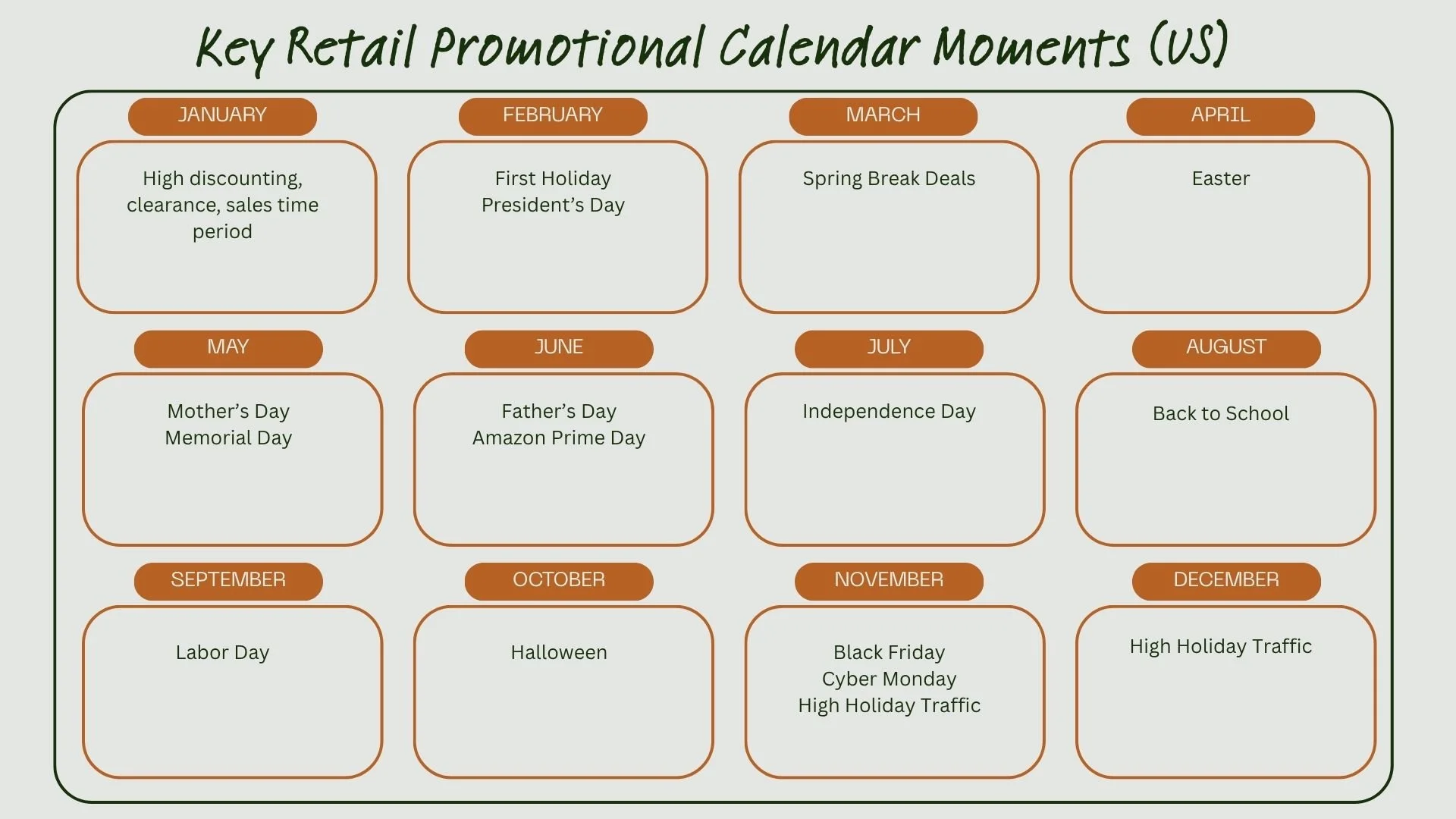
Weather shifts, holiday shopping behavior, gifting periods, and category-specific buying windows all influence customer purchasing patterns.
For example:
Swimwear demand increases before summer
Outerwear peaks in fall and winter
Resort collections often launch months before travel seasons begin
Understanding retail seasonality helps brands align inventory with when customers are actually ready to buy.
2. Customer Behavior
Customer purchasing patterns are one of the most valuable forecasting tools brands have.
Tracking:
Repeat purchase behavior
Best-selling product categories
Average order value
Price sensitivity
…can help brands identify where demand is strongest and where inventory investment should increase or decrease.
3. Marketing & Launch Calendars
Inventory planning should always align with marketing activity.
Paid ads, influencer campaigns, PR placements, email marketing, and product launches can all significantly impact demand.
One successful campaign can dramatically increase sales velocity, which is why production and marketing calendars should work together, not separately.
4. Industry & Trend Insights
Fashion is heavily influenced by:
Trend cycles
Social media behavior
Competitive landscape shifts
Cultural changes
Monitoring the broader market helps brands identify:
Emerging opportunities
Oversaturated categories
Shifting customer preferences
The Role of Inventory Planning in Cash Flow Management
Inventory and cash flow are directly connected.
Every inventory investment ties up working capital, which means overproduction can limit a brand’s flexibility to invest in:
Marketing
Product development
Team growth
Future inventory opportunities
Strong inventory planning helps brands preserve cash flow while maintaining enough inventory to support sales demand.
Inventory turnover also plays a major role in profitability. The faster inventory sells through, the faster capital becomes available to reinvest back into the business.
Brands carrying excessive inventory often experience:
Increased storage costs
Heavier markdown pressure
Reduced operational flexibility
Inventory Metrics Every Fashion Founder Should Track
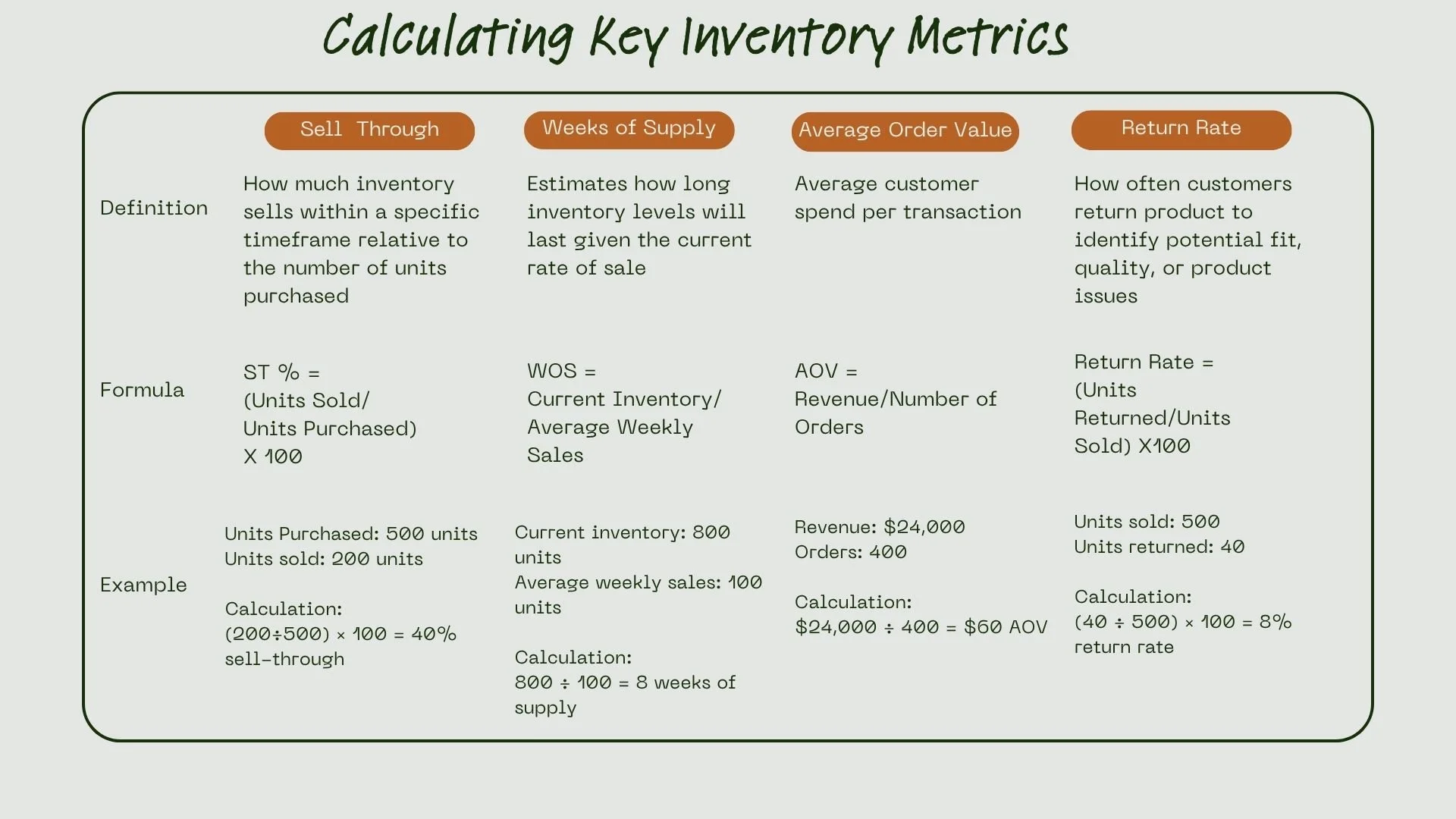
As brands grow, tracking key inventory metrics becomes essential for smarter forecasting and purchasing decisions.
Important metrics include:
Sell-Through Rate
Measures how much inventory sells within a specific timeframeWeeks of Supply
Estimates how long current inventory levels will lastAverage Order Value (AOV)
Measures average customer spend per transactionReturn Rate by SKU
Helps identify potential fit, quality, or product issues impacting profitability
How Fashion Brands Can Start Forecasting Inventory More Accurately
Analyze Historical Sales Data
Historical sales performance provides one of the clearest forecasting foundations available.
Brands should regularly review:
Units sold by style, size, and color
Best and worst-performing categories
Sell-through percentages
Weeks of supply remaining
The goal is to identify patterns, not isolated sales moments. This information must be collected and stored somewhere so that you can track historical performance over time.
Retailers operating at the highest level conduct robust sales analyses on a daily and weekly basis, but new founders should expect to do a deep dive at least monthly.
Build an Inventory Planning Framework
As brands grow, inventory planning should become more structured and repeatable.
This may include:
Sales projections
Open-to-buy planning
Reorder thresholds
Safety stock planning
Having a framework allows brands to make inventory decisions proactively instead of reactively.
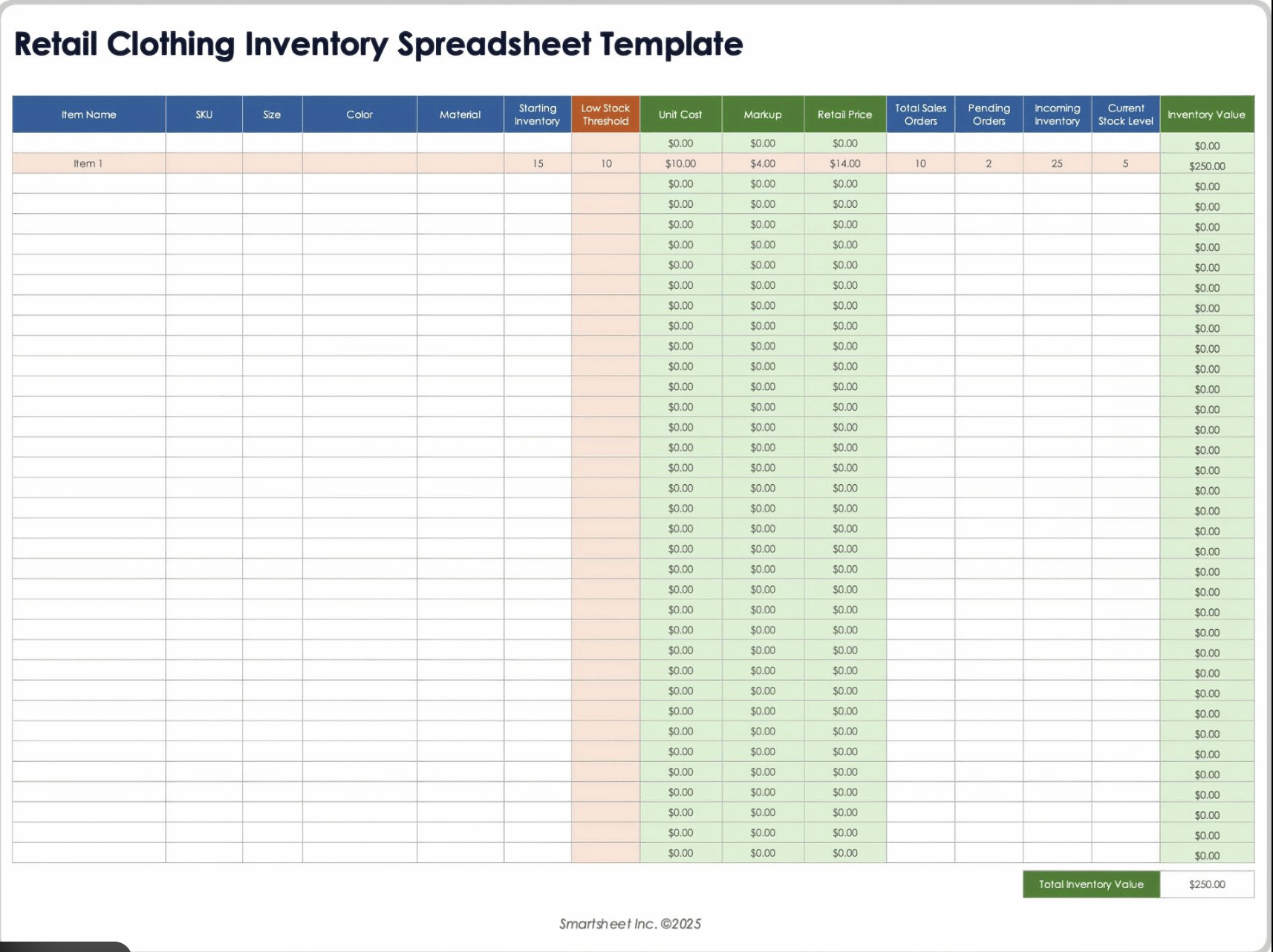
Tracking inventory and sales data doesn’t need to be overly complex
Start Small and Test Demand
Not every product needs a large inventory commitment immediately.
Many successful brands reduce risk through:
Limited launches
Capsule collections
Pre-orders
Waitlists
Small-batch production strategies
Testing demand before scaling production helps brands gather customer feedback while protecting cash flow.
How Technology Can Improve Demand Forecasting
As brands scale, technology can significantly improve forecasting accuracy and operational visibility.
Inventory management systems, ecommerce analytics platforms, and forecasting software can help brands:
Track sales trends in real time
Monitor inventory performance by SKU
Improve reorder planning
Identify demand shifts earlier
The goal isn’t perfect forecasting—it’s building systems that support smarter decision-making over time.
Final Thoughts: Inventory Planning Is a Growth Strategy
As fashion brands grow, inventory planning becomes increasingly connected to every part of the business, from sourcing and production timelines to pricing strategy, cash flow, and long-term scalability.
At ARD Fashion Consulting, we help brands move beyond reactive decision-making by building more strategic systems around product development and inventory planning.
Our team supports clients by helping them:
Build inventory planning processes that support healthier growth
Optimize product assortments and SKU strategies
Improve sourcing and production planning
Scale collections more intentionally and profitably
Align product development decisions with long-term business goals
Whether you’re preparing for your next launch, expanding into new categories, or refining your production strategy as demand grows, ARD helps brands create the operational foundation needed to scale more confidently and sustainably.